
A disaster plan for a renter with a pet has to work inside a building, not just on a printable checklist. Your dog may be behind a locked apartment door when an evacuation notice arrives. Your cat may hide under the bed while the elevator is out. Your fish tank may be too heavy to move, your carrier may be buried in a closet, or the nearest shelter may not accept animals.
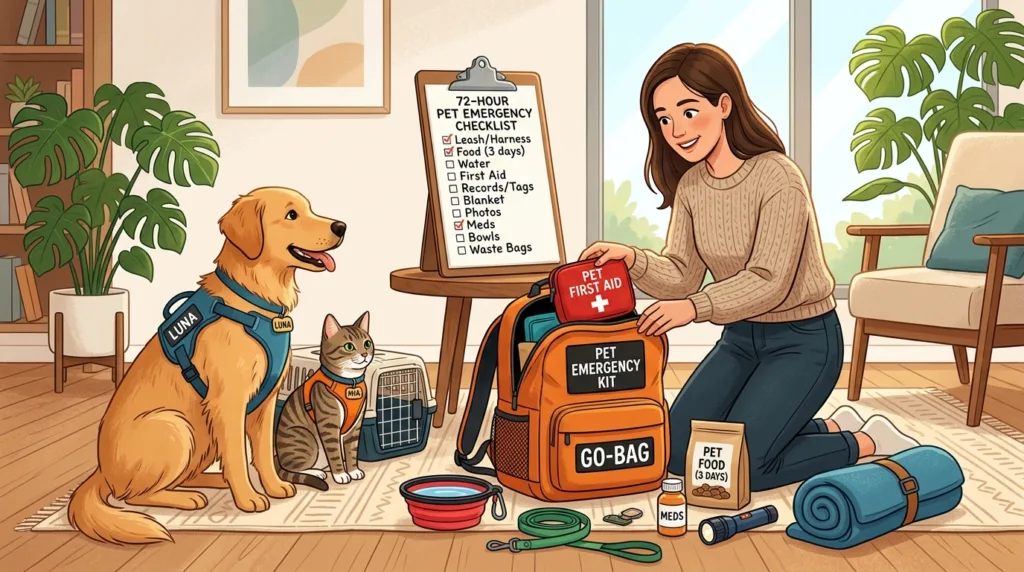
This 72-hour plan is designed for U.S. apartment renters. It covers the first three days of a disruption, whether you shelter in place or leave. It is a planning framework, not a guarantee that every emergency lasts 72 hours and not veterinary advice. Follow local officials during an active emergency; if your pet is injured or seriously ill, contact a veterinarian or emergency animal service.
Before the emergency: build a plan that fits the building
Start with the parts of apartment life that a general emergency list often misses. Walk the route from your unit to the street. Find the nearest usable stairwell, the alternate exit, the place where you can meet a helper, and the outdoor area where you can safely pause. Ask property management whether pets may use common areas during an evacuation, how residents receive emergency notices, and what happens if the elevator or electronic entry system stops working.
A renter without a car needs a different plan from a renter with a garage. Identify a friend, neighbor, family member, pet sitter, taxi service, or rideshare option that can help move the animal and supplies. Do not assume a regular rideshare driver will accept a pet during a stressful evacuation. Call hotels, boarding facilities, relatives, and local animal shelters before you need them and save the answers.
Ready.gov recommends a pet evacuation plan, a buddy system, updated microchip information, and contact with local emergency management, animal shelters, or animal control. Its current guidance also recommends keeping both a larger shelter-in-place kit and a lighter evacuation kit review Ready.gov’s pet emergency guidance.
Make two kits instead of one overloaded closet
An apartment renter usually needs a kit that can be carried down stairs, plus supplies that can remain at home if officials say it is safe to shelter in place. Keep both where you can reach them quickly. A carrier hidden under winter clothes is not an emergency plan.



Use a backpack, soft carrier, or small rolling container that you can carry with your pet. Include several days of food, water, bowls, medications, waste bags or litter supplies, a leash and backup leash, harness, identification, a current photo, a small first-aid supply, a familiar blanket, and copies of medical and ownership records.
Keep additional food and water, sanitation supplies, cleaning materials, extra medication when available, spare batteries, towels, paper products, a flashlight, and species-specific supplies. For fish, birds, reptiles, rabbits, or small mammals, ask a veterinarian about transport, temperature, water, food, and enclosure needs.
Ready.gov advises storing medication and records in a waterproof container, keeping identification current, and including a sturdy carrier or crate. The American Red Cross also recommends photos of you with your pet, feeding and medical instructions, and the veterinarian’s contact information see the Red Cross pet disaster preparedness guide.
Do not wait for an evacuation warning to discover that your dog hates the carrier or your cat will not come out when the smoke alarm sounds. Leave the carrier open in a familiar place, add treats, and practice short hallway or stairwell trips. A five-minute practice is more useful than a perfect checklist your pet cannot tolerate.
The 72-hour clock: what changes as the event develops
| Time window | Renter’s priority | Pet-specific question |
|---|---|---|
| Now to 6 hours | Verify alerts, charge phones, locate supplies, and contact the building and destination. | Can I reach my pet, carrier, records, medication, and exit without using the elevator? |
| 6 to 24 hours | Choose shelter-in-place or evacuation based on official instructions and actual building safety. | Where will the animal relieve itself, rest, eat, and remain separated from hazards? |
| 24 to 72 hours | Track supplies, sanitation, communication, medication, and housing changes. | What is my backup if the hotel, shelter, boarding facility, or building becomes unavailable? |
The 72-hour label is a planning horizon, not a promise. Food, medication, water, shelter, transportation, and local recovery can take longer. Recheck the plan for a senior dog, a pet with diabetes, a nursing animal, multiple pets, or a household member with mobility limitations.
If you stay: turn one room into a safer zone
Shelter in place does not mean ignoring the apartment’s hazards. Select an interior room away from windows, smoke entry, floodwater, falling objects, and the building’s busiest doors. Keep the pet with you, close doors, secure carriers, and prevent animals from roaming through a damaged building or neighborhood.
Move food, water, medications, litter or waste supplies, a flashlight, phone charger, towels, and the pet’s familiar bedding into the safe zone. Keep cats contained before opening an exterior door. Keep dogs on leash even indoors if doors, windows, fences, or walls may be damaged. Do not use a damaged balcony, garage, stairwell, or utility room as an improvised pet area.
For heat, smoke, storms, or flooding, rely on local emergency instructions rather than guessing that a closed window makes the apartment safe. If officials tell you to evacuate, leave. Do not give human medication to a pet unless a veterinarian has instructed you to do so.
If you leave: the destination is part of the evacuation route
Call before driving or booking transport. Many public shelters and hotels do not accept pets, and service-animal access is a separate legal issue from ordinary pet acceptance. Ask whether animals may stay in the room, whether vaccination records are required, whether there is a pet fee, whether crates are required, and whether the facility can handle your species and size.
For renters in Tampa or coastal Florida, the safe destination may need to be inland and available before a hurricane evacuation begins. In Phoenix, extreme heat changes the time of day, vehicle plan, and need for water. In Chicago, snow and ice can make a carrier, booties, towels, and a short route more practical than a long walk. In Los Angeles, smoke or wildfire evacuation can change routes quickly. In Houston, flooding can cut off a familiar road or apartment access point. In Seattle, an earthquake may make elevators and electronic entry unreliable.
These city examples are planning prompts, not predictions or citywide rules. Check your local emergency management office, animal control agency, and the property’s emergency communications. Save primary and backup destinations on paper as well as in your phone.
Use a buddy system before you need one
Ask one nearby person and one person outside the immediate area whether they can help collect or evacuate your pet if you are away. Give them written permission, the building’s access instructions, the carrier location, feeding and medication notes, the veterinarian’s contact, and your destination plan. Tell them what your pet does when frightened and whether the animal hides, bolts, scratches, or refuses food.
Do not hand over a key without deciding how it will be stored and returned. If the property uses a key fob or app, ask management what happens during a power or network outage. A buddy who cannot enter the building is not a complete backup plan.
“If I cannot get home, who can reach my apartment, safely collect my pet, carry the kit down the stairs, and tell me where they are going?”
Illinois made this problem concrete in a June 1, 2026 public preparedness release. Its emergency management agency advised residents to coordinate with a neighbor, family member, or friend who can collect pets and their kit, while warning that many shelters or emergency centers do not allow pets read the Illinois preparedness notice. The release is Illinois-specific, but the renter problem is widely recognizable: an evacuation can begin while you are at work, commuting, or unable to get back through the building.
Communication is part of pet safety
Write down your pet’s name, species, color, identifying marks, microchip number, medications, allergies, veterinary contact, emergency contacts, and your temporary destination. Put a copy in the kit, keep a waterproof copy with the carrier, and store a digital copy that a trusted person can access.
Take a current photo of your pet and a photo of you with the pet. Save the building address, apartment number, management phone number, local animal control, nearby emergency veterinarian, and at least one pet-friendly lodging or boarding option. Turn on local alerts and keep a portable charger available. Ready.gov recommends wireless emergency alerts and the FEMA app for location-based warnings check Ready.gov alerts information.
Use social media carefully during a disaster. A post saying “pets welcome” may be old, incomplete, or refer only to service animals. Confirm directly with the shelter, hotel, county, or emergency organization before relying on it.
Short questions that expose a weak plan
What if the elevator is out?
Can you carry the carrier or guide the dog down the stairs? Do you have a second exit, a helper, and a place to rest outside? Practice before an emergency.
What if the apartment door will not open?
Do not force a dangerous exit. Contact building management or emergency officials, keep the pet contained, and follow instructions. A neighbor should know how to reach the unit if you are away.
What if the shelter does not accept pets?
Use the backup destination you identified earlier: a pet-friendly hotel, boarding facility, veterinary facility, relative, friend, or animal shelter program. Call before traveling because availability changes.
What if my pet is frightened or missing?
Keep identification current, use the carrier or leash, avoid chasing a frightened animal into damage, and contact local animal control, shelters, and the microchip registry. Bring the photo and proof of ownership.
After 72 hours: do not return to normal too quickly
An apartment can look usable while hiding broken glass, contaminated water, damaged wiring, chemical residue, open walls, extreme heat, or unfamiliar animals. Ask property management whether the unit and common areas are safe before returning. Keep your pet contained during inspection and do not let an animal roam through a damaged building.
Watch for changes in eating, drinking, breathing, walking, elimination, sleep, hiding, or aggression. Stress can appear after the noise and movement stop. Contact a veterinarian if your pet has symptoms, possible toxin exposure, injury, or a major behavior change. If the unit is not habitable, ask the landlord, local emergency management, animal control, and relief organizations what temporary pet-friendly options exist; do not assume your lease answers every disaster scenario.
Once you are safe, replace used supplies, update the kit, review what failed, and change the plan. The best plan is not the longest list. It is the one that lets a renter find the pet, leave the building, carry the essentials, communicate with a helper, and reach a safe destination without making a frightened animal solve the emergency alone.
For related apartment preparation, see PetzNews’s moving-day checklist for renters with pets, apartment inspection guide, and guide to separation anxiety in apartment dogs.

Alex is the content editor at PetzNews, covering pet care guidance and pet-friendly housing topics for renters and property owners across the United States