
The carrier comes out, your cat disappears under the bed, and the apartment suddenly feels too small for both of you. In a rental, there may be no second room to close off, no garage for storage, and no quiet hallway for a last-minute struggle before the vet. That is why the best cat-carrier plan is not about buying a box and hoping for cooperation. It is about making the carrier familiar enough to work on an ordinary Tuesday, a veterinary morning, a move, or an emergency.
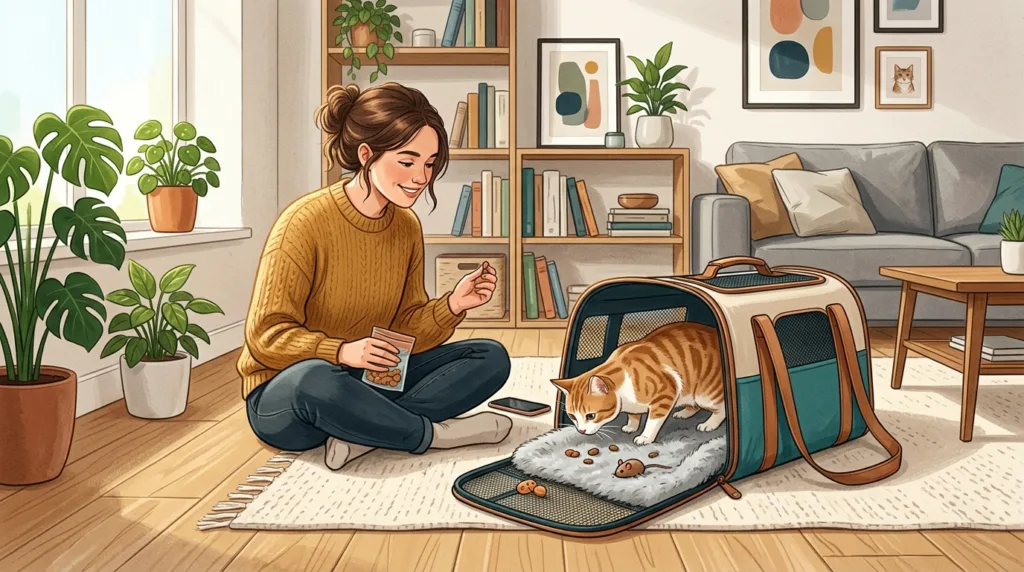
The Feline Veterinary Medical Association updated its transportation guidance in 2025, emphasizing that the carrier, the trip, and the way the cat is handled can affect feline distress and even whether caregivers delay veterinary care. For an apartment renter, that turns carrier training into a small-space safety project: choose equipment that fits the cat and the home, then teach the cat that entering it does not automatically mean something frightening.
Start with the room, not the shopping cart
A carrier that is technically suitable can still fail in an apartment. Measure the place where it will live, including the clearance needed to open the door or remove the top. Do not store it behind a folding table, inside a packed closet, or on a high shelf that requires a chair when you are already late for an appointment.
Look for a carrier that is sturdy, ventilated, easy to clean, and large enough for the cat to stand, turn around, sit, and lie down comfortably. A front opening can invite voluntary entry; a removable top or top opening can help a veterinary team examine a frightened cat without pulling the animal through a small door. The 2026 AAHA guidance also highlights top-opening or removable-top designs and notes that older cats can still learn to tolerate a carrier with time and patience read AAHA’s current guidance on reducing veterinary-visit stress.
Do not choose a carrier only because it is the easiest one to hide. If your cat is large, senior, arthritic, pregnant, or likely to need frequent transport, ask your veterinarian what dimensions and handling features are appropriate. If you have two cats, plan on two carriers. A shared carrier may look efficient in a small apartment, but it can become unsafe when both animals are frightened or one needs medical isolation.
Make the carrier part of the furniture
The most useful change is often free: leave the carrier out. Put it in a room your cat already uses, remove the door if that makes the first approach easier, and place familiar bedding inside. In a small apartment, that may mean positioning it beside a bookshelf, under a console table, or near a window rather than treating it as emergency equipment in a storage closet.


Cat Friendly Homes recommends making the carrier part of the home environment, pairing it with treats or toys, and allowing days or weeks for trust to develop. The goal is not to force a cat to “prove” courage. The goal is to give the cat repeated experiences of approaching, sniffing, resting near, and eventually entering without the carrier immediately becoming a trap see Cat Friendly Homes’ carrier and veterinary-visit guidance.
Use the cat’s normal preferences as clues. A cat who sleeps on a fleece blanket may accept that scent sooner. A cat who prefers a covered nook may feel better with part of the carrier covered, provided ventilation remains clear. A cat who dislikes hands reaching over its head may prefer a carrier that opens from the top. This is not a universal formula; it is observation applied to the equipment.
A training ladder for cats who are curious, cautious, or already afraid
Training should move only when the current step looks ordinary to the cat. If the cat freezes, hides, swats, pants, vocalizes intensely, or stops taking a normally valued treat, reduce the difficulty. The FelineVMA and AAHA both emphasize gradual acclimation and minimizing distress rather than forcing the animal through a single “successful” loading.
- Near the carrier: reward calm behavior in the same room. Do not drag the carrier toward the cat or use it as a surprise container.
- At the entrance: place a treat or toy near the opening, then let the cat decide whether to investigate. Keep the session short enough to end before fear appears.
- One step inside: reward any voluntary reach or entry. Keep the door open and do not immediately touch the carrier.
- Resting inside: add bedding and allow the cat to leave. Repeat on different days, not only before an appointment.
- Brief door movement: close and reopen the door for a moment, then reward calm behavior. Build duration slowly.
- Lift and set down: support the carrier from underneath and make the movement smooth. A swinging carrier can make the cat feel unstable.
- Hallway practice: carry the closed carrier a short distance inside the building, then return home. Later, practice the route to the car or a safe transport point.
This sequence is not a promise that every cat will become relaxed in a carrier. It is a way to replace a single dramatic loading event with many small, controllable experiences. If the cat has a history of panic or aggression, ask the veterinary team or a qualified behavior professional for a plan rather than escalating force.
Apartment noises are part of the lesson
A cat that enters the carrier calmly in the living room may react differently to a fire alarm, elevator chime, barking dog, hallway door, or rolling suitcase. Do not manufacture frightening events. Instead, build ordinary exposure carefully: open and close the apartment door while the cat remains at a comfortable distance, carry the empty carrier through a quiet hallway, or practice near the elevator only when the building is calm.
Renters should also consider the building’s rules. If the elevator is under repair, can you carry the carrier safely down the stairs? If the property uses a key fob, can a caregiver enter during a power outage? If a maintenance worker must enter the unit, where will the cat be contained? The answers belong in the carrier plan because the carrier is part of how the cat leaves the apartment safely.
For cats living in very small units, rotate the carrier’s location rather than letting it become invisible. It can function as a quiet resting place, but it should not block an exit, heater, balcony door, or litter-box route. If you are moving, begin carrier acclimation before boxes fill the apartment; clutter removes hiding and handling options at exactly the wrong time.
The trip changes the rules
Once the cat is comfortable entering, practice transport separately from training. The 2025 FelineVMA position statement recommends that carriers be placed on the vehicle floor behind the driver or front passenger seat. A seat belt should be used only with a carrier that is crash-test certified; do not assume that any carrier becomes safer just because a belt is wrapped around it read the FelineVMA’s 2025 transportation position statement.
Carry the carrier with two arms, close to your body, rather than swinging it by the handle. A towel or blanket may reduce visual stimulation, but never cover ventilation. Keep the cat inside the carrier in the vehicle; a loose cat can escape when a door opens or interfere with driving. For a first ride, choose a short, quiet route and return home before the cat is overwhelmed.
If you do not have a car, practice the version of the trip you can actually use. Ask the veterinary clinic whether it has transport guidance, identify a pet-accepting taxi or rideshare option, and learn how the carrier can be kept stable on public transit. Policies and availability differ by provider and city, so confirm before the appointment rather than assuming a driver will accept a cat in a soft carrier.
When the cat is already frightened
A cat that runs at the sight of the carrier is not being stubborn. The object may predict restraint, engine noise, strange smells, handling, or a painful procedure. Chasing the cat through a small apartment can make the next attempt harder and can put the renter at risk of a bite or scratch.
Cat Friendly Homes advises against the chase and recommends calm, gradual preparation. If an urgent veterinary trip happens before training is complete, move the cat into a small room with fewer hiding places, close the door, slow your movements, and use a top-opening or removable-top carrier when possible. Do not give medication, supplements, or sedatives without veterinary direction. Ask the clinic in advance whether pre-visit medication is appropriate for this particular cat.
Severe distress, repeated vomiting, breathing changes, collapse, injury, or a cat who may have ingested a toxin is an urgent veterinary situation. Carrier training is useful prevention, not a substitute for emergency care.
The clinic handoff matters too
Training does not end at the apartment door. Tell the clinic how your cat reacts to the carrier, whether the animal has a preferred opening, and whether the cat becomes more distressed when handled in a crowded waiting room. If the practice allows it, wait in the car or a quieter area. Keep the carrier stable and avoid tipping or shaking it.
After a veterinary visit, a returning cat may smell unfamiliar to the other cats in the home. Cat Friendly Homes recommends watching the household’s reaction and, when necessary, giving the returning cat a separate comfortable room with food, water, litter, and bedding until the familiar scent returns. That detail matters in apartments because a narrow hallway or single living area may make an immediate reunion harder to manage.
Three decisions before you buy another carrier
Keep the current carrier if it is structurally sound, easy to clean, appropriately sized, accessible, and compatible with your cat’s gradual training. A familiar carrier can be an advantage.
Modify the setup if the carrier works but the apartment routine does not. Move it into the cat’s living space, add washable bedding, remove clutter around it, or create a reliable path from the carrier to the exit.
Ask for veterinary input before replacing it if your cat is senior, arthritic, unusually large, repeatedly panics, becomes motion sick, or has a history of aggression during loading. A more expensive carrier is not automatically safer or less stressful. The useful purchase is the one that matches the cat, the caregiver, the apartment, and the actual route to care.
For related apartment planning, see PetzNews’s guide to indoor cat enrichment, senior cat care in an apartment, and pet emergency preparation for apartment renters.

Alex is the content editor at PetzNews, covering pet care guidance and pet-friendly housing topics for renters and property owners across the United States