
Ferrets can fit into an apartment, but they do not fit into a “small cage and occasional playtime” routine. Their compatibility depends on daily exploration, secure containment, odor management, veterinary planning, and a lease that clearly permits the species. The apartment is only the backdrop; the real question is whether the household can provide a controlled environment for an intelligent, curious animal that can squeeze through gaps and investigate every unsafe corner.
This guide uses the Merck Veterinary Manual, small-mammal veterinary guidance from VCA, and public-health information from the CDC. It is general information, not a substitute for a veterinarian experienced with ferrets.
Start with the routine, not the enclosure
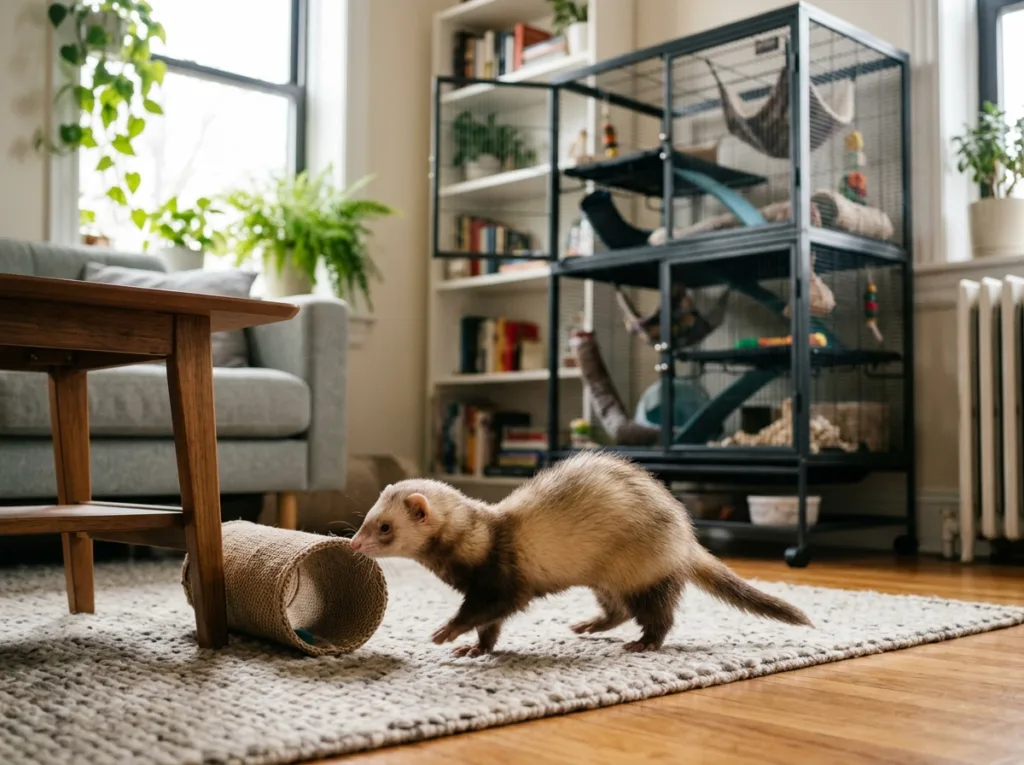
A ferret needs a secure sleep area, but a cage is not the whole home. Daily supervised time outside the enclosure allows exploration, play, climbing, digging, and social interaction. That creates a different apartment requirement from a hamster habitat: you need a ferret-proof room or a carefully managed zone with doors, vents, appliances, furniture gaps, cords, plants, and other animals under control.
| Requirement | Why it matters | Apartment test |
|---|---|---|
| Secure enclosure | Provides sleep, litter, food, and emergency containment. | Can doors and latches resist persistent investigation? |
| Daily exploration | Supports movement and enrichment beyond cage time. | Can one room be cleared and supervised every day? |
| Escape prevention | Ferrets fit into small gaps and may open weak barriers. | Are vents, doors, recliners, cabinets, and plumbing gaps secured? |
| Odor control | Ferret musk and waste can be noticeable in a shared building. | Can litter be scooped and bedding washed without fragrance overload? |
| Veterinary access | Ferrets need species-specific preventive and emergency care. | Is an exotic veterinarian reachable before adoption? |
| Lease clarity | “Caged pet” language may not cover a ferret. | Do you have written approval for the species and number? |
Ferret-proofing is an ongoing process
Ferrets are good at finding the one hazard an owner missed. Reclining chairs and sofa mechanisms can trap an animal. Foam cushions, rubber objects, electrical cords, open toilets, unsecured windows, and small holes behind appliances can cause injury or escape. Close doors before release, inspect the room at floor level, and supervise play rather than assuming a familiar room remains safe forever.
Use barriers that cannot be pushed aside and latches that a curious animal cannot defeat. Do not rely on baby gates designed for dogs unless their spacing and fastening have been tested. Keep a carrier accessible for emergencies, repairs, inspections, or fire alarms.
A ferret’s cage should support behavior, not just storage
Provide a stable enclosure with sleeping materials, a litter area, food and water, and room for movement. Hammocks and tunnels can enrich the space, but they do not replace daily out-of-cage activity. Keep food, water, and litter arranged so the ferret can use them without climbing through unstable equipment.


Ferrets often sleep for many hours, so a quiet, dark resting area matters. At the same time, an apartment owner should not use long sleep periods as a reason to leave the animal confined whenever it is awake. Build playtime into the daily schedule and make it realistic for weekends, travel, and illness.
Odor is a management issue, not a reason to use harsh products
Ferret odor comes from the animal, bedding, litter, waste, and the room’s ventilation. Frequent litter removal, washable bedding, clean surfaces, and appropriate airflow are more reliable than strong perfumes or deodorizing sprays. Heavily scented products can irritate animals and may conceal a problem rather than solve it.
Place the enclosure away from cooking, food storage, and shared ventilation where possible. Store food and cleaning materials safely. Wash hands after handling the animal, waste, bedding, or food; the CDC notes that small mammals can carry germs even when they appear healthy.
Nutrition and veterinary care change the budget
Ferrets are obligate carnivores with species-specific nutritional needs. Use a complete diet recommended by an exotic veterinarian rather than improvising with table food or a generic small-mammal mix. Keep fresh water available and ask the veterinarian how to handle treats, dietary changes, and signs of gastrointestinal or metabolic illness.
Before adoption, identify a veterinarian who sees ferrets and ask about vaccines, parasite prevention, dental care, emergency hours, and the legal or health records needed in your area. VCA recommends establishing care for new small mammals rather than waiting for illness. Budget for transport, after-hours care, and a backup caretaker.
Other pets and roommates require a written plan
Dogs and cats may injure a ferret or become stressed by its movement and scent. Introductions should be controlled and never assumed safe because the other animal is friendly. Keep separate housing and create a rule that doors are closed before a ferret leaves its enclosure.
Roommates need to understand noise, odor, supervision, and access boundaries. A ferret should not be allowed into another person’s room without permission. If a roommate works nights or has health concerns, decide which areas are shared and how cleaning duties are handled.
Read the lease as if the species were not a dog or cat
Ask for written permission that identifies ferrets specifically. Clarify whether the property bans exotic animals, limits the number of pets, requires a deposit, or imposes inspection or sanitation conditions. Ask whether the building’s insurance or local ordinance affects the decision. Keep the approval with your lease, because verbal reassurance may not survive a management change.
A good request describes the ferret’s enclosure, play area, escape controls, cleaning schedule, veterinary plan, and responsibility for damage. “It stays in a cage” is less useful than a clear description of how the animal is safely contained and how odor and waste are managed.
Apartment problems that are preventable
| Problem | Likely weak point | Preventive action |
|---|---|---|
| Escape during delivery | Front door opens while the ferret is loose. | Secure the ferret before opening the door and use a second barrier. |
| Chewed object | Rubber, foam, or soft plastic left in play space. | Remove hazards and offer safe tunnels and toys. |
| Odor complaint | Litter or bedding cleaning is inconsistent. | Schedule daily waste removal and regular bedding wash. |
| Damage to flooring | Water, litter, or enclosure movement reaches the floor. | Use a stable waterproof mat and inspect under equipment. |
| Conflict with another pet | Unsupervised access or open doors. | Use separate zones and a door checklist. |
Know when the ferret is unwell
Loss of appetite, weakness, breathing difficulty, persistent diarrhea, vomiting, collapse, inability to urinate, sudden pain, abnormal neurologic signs, or a major behavior change require veterinary guidance. Ferrets can deteriorate quickly. Do not delay because the animal is still moving or because a symptom appears intermittent.
Keep a record of food intake, stool, activity, weight when your veterinarian recommends monitoring, and any medication. This information is useful during an emergency and helps distinguish a routine change from a health change.
A pre-adoption decision gate
- Confirm the lease, local rules, and insurance position in writing.
- Locate an exotic veterinarian and emergency transport plan.
- Designate a secure room and remove escape and chewing hazards.
- Budget for enclosure, litter, food, bedding, vaccines, examinations, and emergencies.
- Agree with roommates on doors, shared spaces, odor, noise, and cleaning.
- Schedule daily supervised play for ordinary weekdays, not only weekends.
For related rental planning, compare the PetzNews apartment-hunting questions, amenities analysis, and small-mammal comparison. A pet-friendly building is not necessarily ferret-ready; the equipment and routine must match the species.
Frequently Asked Questions
Can ferrets live in an apartment?
Yes, when the lease permits them and the owner can provide a secure enclosure, daily supervised exploration, ferret-proofing, hygiene, and veterinary care.
Are ferrets low-maintenance because they sleep a lot?
No. Sleep does not replace their need for daily enrichment, exercise, social interaction, safe exploration, and preventive care.
Do ferrets smell?
They can have a noticeable natural odor, and waste or bedding can intensify it. Ventilation, frequent cleaning, and appropriate products help but do not make the animal odorless.
Trial the routine before committing
Borrow or volunteer with ferrets if possible before adopting. Observe the difference between a short visit and a daily routine that includes secure release, litter cleaning, enrichment, feeding, and inspection of the room. The challenge is not whether the ferret can physically fit in the apartment; it is whether the owner can maintain the same safety standard when tired, late, or distracted.
Plan for building events. A fire alarm, pest treatment, maintenance visit, or water leak may require the ferret to remain in a carrier or move temporarily. Keep the carrier, food, records, and emergency contact together, and make sure a backup caretaker knows how to close the enclosure and prevent escapes.
Secure the routine when the owner is away
Ferret care fails most often at the edges of the schedule. A late workday can shorten playtime, a visitor can leave a door open, and a cleaner may not know which room is restricted. Write a short handoff instruction: where the ferret stays, which doors remain closed, what food is used, how litter is cleaned, and who to call if the animal escapes or appears ill.
Keep enrichment varied but safe. Rotate tunnels, boxes, and supervised games rather than leaving loose rubber or foam objects available. Any toy that can be chewed into pieces should be inspected and removed when damaged. The apartment should be arranged for prevention, not for testing how clever the ferret is.
Measure success by calm, safe access
A ferret-ready apartment is not the one with the most equipment; it is the one where the animal can sleep, explore, eat, eliminate, and return to secure housing without repeated hazards. Watch whether the ferret can disengage from play, use the litter area, and remain curious without constant destructive chewing. If the routine produces repeated escapes or injuries, redesign the room and consult a ferret-experienced professional rather than adding more freedom.

Alex is the content editor at PetzNews, covering pet care guidance and pet-friendly housing topics for renters and property owners across the United States