
A maintenance visit changes something about an apartment before the repair even begins: someone who is not part of the household may open the front door.
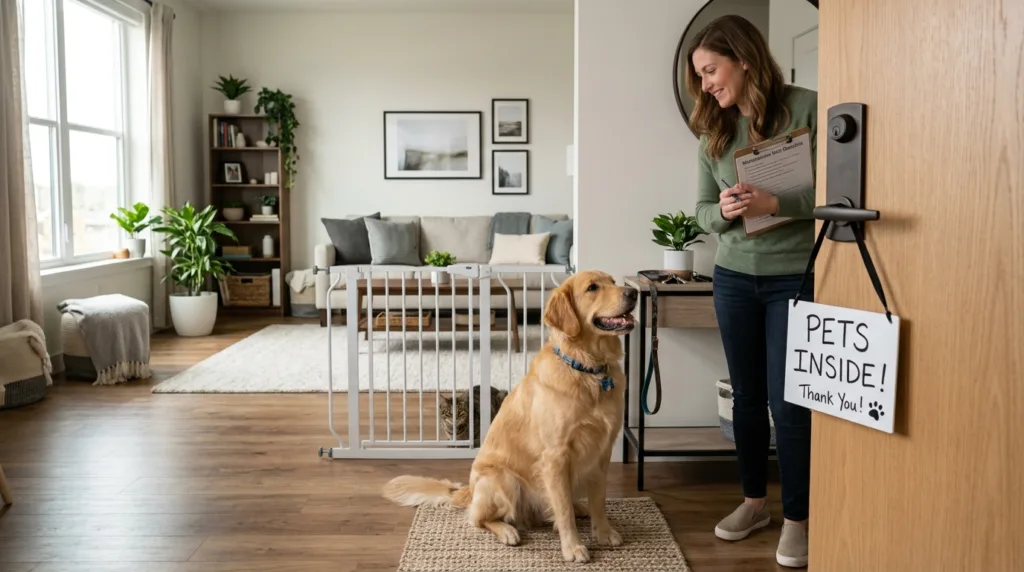
For a renter without pets, that may be little more than an access issue. With a dog or cat inside, the same visit can change the normal movement of the home. A worker may enter while the renter is away, make several trips between the unit and hallway, carry equipment through a doorway or need access to a room the pet normally uses.
The safest plan therefore starts with the entry route, not with the broken faucet or malfunctioning outlet.
It also needs to match the actual pet. A cat that disappears under a bed when strangers arrive presents a different problem from a dog that rushes toward the front door. A dog comfortable resting in a familiar room may need little more than separation from the work area, while another animal may become distressed when confined unexpectedly.
The maintenance notice gives you a chance to decide how those situations will be handled before a worker has a key in the door.
Plan for the moment someone enters the apartment
When management sends a maintenance window, start by finding out what the visit will require.


Will someone enter only once, or will the worker move repeatedly between the apartment and hallway? Does the repair involve the kitchen, bathroom or bedroom? Will management enter if nobody answers? Is the visit being performed by regular building staff or an outside contractor?
Those details change where the pet can safely stay.
A cat secured in a bedroom may be well separated from a plumber working under the kitchen sink. The same bedroom becomes a poor choice if the repair involves its window or air-conditioning unit. Likewise, placing a dog behind a baby gate may seem adequate until a contractor needs to carry a large appliance through the same hallway.
The containment plan should survive the work being performed rather than simply survive the first knock on the door.
Veterinary safety guidance on home repairs consistently identifies open doors, unfamiliar workers and construction activity as potential escape and injury risks for pets. Workers may move in and out several times, and even a pet that normally shows little interest in the apartment door can react differently when the household routine changes.
For cats, unfamiliar people and increased traffic can be stressful in their own right. A secure retreat works better when it contains the resources the cat may need while the visit is happening: water, an appropriate litter box, a familiar resting or hiding place and enough separation from the activity outside.
For dogs, the appropriate arrangement depends heavily on the individual animal. A dog that reacts strongly to visitors should not be expected to greet maintenance staff simply because the worker says they like dogs. If unfamiliar people already trigger barking or agitation, our guide to reducing dog barking problems in an apartment explains why identifying the trigger is more useful than treating every episode as a generic noise problem.
A familiar closed room can work for many pets. A carrier may be appropriate for some cats for a short period if they are already comfortable using it. A crate can be suitable for a dog that is already accustomed to resting there, but maintenance day is a poor time to discover whether an anxious dog tolerates sudden confinement.
If the repair is long, noisy or requires access to much of the apartment, keeping the pet somewhere else may be simpler. A trusted person, appropriate daycare arrangement, boarding option or another familiar location can sometimes reduce both escape risk and exposure to the repair environment.
The important point is that containment should not depend on the worker managing your animal.
Maintenance staff need to be able to enter, move equipment and complete the repair without being asked to monitor whether a cat is approaching the door or whether a dog has slipped out of a room behind them.
A simple note on the secure-room door can help:
PET INSIDE — PLEASE DO NOT OPEN
If management uses a resident portal, the work order can also state that a pet is present and identify the room that should remain closed. Keep the message short and operational. The worker needs to know what affects safe access, not the animal’s complete history.
If you will not be home, verify what the property expects from residents before the visit. Your lease, building rules or maintenance procedures may address authorized entry, pets during service calls or how maintenance requests are handled. Those rules vary, so check the documents for your property rather than assuming one nationwide procedure. Our broader guide to reviewing pet rules before signing a lease explains why property rules and referenced documents should be read together rather than relying on a general “pet-friendly” label.
The safe room can stop being safe once the repair starts
Separating the pet from the worker solves only the first part of the problem.
Maintenance can temporarily change the physical environment of the apartment.
A cabinet may remain open. A window screen may be removed. A utility-panel door can expose wiring. Tools, screws or pieces of material may be placed on the floor. A worker repairing drywall, flooring or plumbing can introduce products that are not normally accessible to the pet.
The ASPCA Animal Poison Control Center has specifically warned about hazards associated with home repairs, including paints, adhesives, spackle, caulk, insulation, electrical cords and project debris. Even a relatively small repair can therefore create risks that did not exist that morning.
This is another reason the repair location matters when choosing where the pet stays.
Suppose maintenance is repairing a leaking bathroom sink. Keeping a cat in the bedroom may provide enough physical separation. But if workers are repainting several rooms, replacing flooring or performing work that generates dust, fumes or repeated traffic, simply closing one interior door may not address every exposure.
Ask what kind of work is actually scheduled when that information would change your pet plan.
You do not need to interrogate a maintenance technician about every product in the toolbox. You do need enough information to know whether your pet should remain in the apartment and which spaces should stay inaccessible until the work is complete.
Wet products deserve particular attention.
Paint, adhesives, cleaners and repair compounds can remain accessible after the worker has left. The ASPCA recommends keeping pets away from work areas until materials have been cleaned up and, where relevant, dried. The important time period is therefore not necessarily the same as the maintenance appointment printed on the notice.
Noise can create another mismatch.
A pet may be physically separated from a drill, hammer or other equipment while still reacting to the sound. Moving the secure area farther from the work zone can help some animals, particularly when the alternative is a room sharing the same wall with the repair.
Do not assume that a hiding pet is automatically comfortable. Cats often seek concealment when their environment becomes unfamiliar, while dogs can respond to strangers or unusual noise through barking, pacing, avoidance or other changes in behavior.
At the same time, ordinary caution should not become amateur diagnosis. A pet being quieter than usual during a brief repair visit does not establish an anxiety disorder. Watch the animal you actually have and compare its behavior with what is normal for that pet.
For a dog that will also be alone while the worker enters, there are really two variables operating at once: the renter is absent and a stranger is entering the home. Leaving a dog home alone in an apartment deserves separate planning when absence itself already produces significant distress.
The worker also needs a safe environment.
A frightened or highly aroused animal can create risk even without a history of aggression. If your dog has previously lunged, snapped or become difficult to control around unfamiliar visitors, telling yourself that the maintenance worker will probably be fine is not a management plan. Secure separation is safer, and significant behavior concerns are worth discussing with an appropriate veterinary or qualified behavior professional.
The same principle applies to curious animals rather than fearful ones. A friendly cat walking between a worker’s legs while tools are being moved is still in the wrong place. A social dog investigating an open toolbox can still ingest or step on something hazardous.
The purpose of separation is not to punish the pet for reacting to a stranger.
It is to make the work zone boringly inaccessible.
Do not release the pet just because the worker has left
The sound of the front door closing should trigger one more step before normal access returns.
Walk through the areas affected by the visit.
Start with the boundaries. Is the front door fully closed? Was a patio or balcony door opened? Are windows and screens back in their normal position? If maintenance accessed a utility closet, cabinet or wall opening, has that area been secured?
Then look down.
Small repair debris is easy for a person wearing shoes to ignore and easy for an animal to investigate. Screws, nails, wire pieces, plastic fittings, insulation fragments or other materials should not remain accessible.
If the repair used paint, adhesive, caulk, cleaner or another product, confirm that the area is ready to be occupied again. A surface that looks finished may still be wet, and a product that is safe after curing may not be something you want on paws or fur while it is fresh.
Check food and water areas as well if work took place nearby. Dust or debris produced during a repair should not become part of the pet’s bowls simply because the bowls were outside the worker’s direct path.
Only then reopen the secure room or bring the pet back.
That sequence also gives you an opportunity to notice whether the maintenance visit changed the rental itself in a way worth recording. If a repair leaves a damaged screen, open wall section, scratched surface or another unexpected condition, photograph what you observe and communicate with management as appropriate. The purpose is not to blame the worker automatically. It is to preserve what the apartment looked like after the visit while the timing is still clear.
That is the same factual approach used when documenting changes or pet-related damage in a rental: record what is visible before deciding what conclusion the evidence proves.
Your pet may need a little time to return to its usual routine as well.
A cat that stayed hidden while strangers were present may not immediately walk into the living room when the apartment becomes quiet again. A dog that spent an hour listening to work outside a closed bedroom may be more alert than usual when released.
Give the animal room to settle instead of turning the end of the maintenance visit into another burst of activity.
Repeated maintenance is different from a one-time repair. If your building is undergoing a larger plumbing project, window replacement or scheduled inspection program, the useful question becomes whether the same containment routine can be repeated safely several times. A solution that works for twenty minutes once may become frustrating for a pet if it happens every morning for a week.
In that situation, consistency can help. Use the same secure area when practical, keep familiar resources there and communicate the same clear instruction to management each time. If the work becomes too disruptive for the pet to remain comfortably separated, reconsider whether staying elsewhere during the most intensive period would be more appropriate.
Apartment maintenance is normal. An escaped cat, a dog confronting a contractor or a pet walking through fresh repair material does not have to be.
The difference is often decided before the worker arrives: who can enter, which door will open, where the pet will be, and whether that location will still be safe once the actual repair begins.

Alex is the content editor at PetzNews, covering pet care guidance and pet-friendly housing topics for renters and property owners across the United States