
Many renters know exactly how their dog behaves while they are home but have only a vague idea of what happens after the apartment door closes. A dog that appears relaxed during breakfast may settle down and sleep for most of the workday; another may spend the first half hour pacing, reacting to hallway sounds or scratching near the exit. Because those behaviors occur outside the renter’s view, problems are sometimes discovered indirectly, through a neighbor’s comment, a damaged door or a message from property management.
Apartment living makes this question especially important. Being alone is not only about the length of the absence. The dog’s age, bathroom needs, activity level and ability to settle all matter, while the building adds another layer through shared walls, hallway traffic, elevators and rental rules. A workable arrangement therefore begins with understanding what the dog actually does during an absence rather than assuming that a quiet dog while you are home remains equally comfortable when you leave.
Find out what happens after you leave
Observation is often more useful than guesswork. If you are unsure how your dog spends time alone, a simple indoor camera can help you identify patterns without requiring you to monitor an entire workday. The important information is usually concentrated around a few moments: the period immediately after departure, reactions to predictable building activity and whether the dog eventually settles.
A dog that vocalizes briefly when the door closes and then sleeps for several hours presents a different situation from one that continues barking, pacing or attempting to escape. Timing also helps distinguish possible causes. A dog that reacts whenever someone walks past the apartment may be responding to an environmental trigger, whereas persistent distress beginning soon after the renter leaves may deserve a different interpretation.
The ASPCA explains that dogs experiencing separation anxiety may begin barking, pacing, destroying objects or attempting to escape within a short period after their guardian leaves. The organization also emphasizes context: some of these behaviors can have other explanations, and separation-related problems are particularly relevant when they are closely tied to the person’s departure or absence.
That distinction matters because the wrong explanation can lead to the wrong response. Extending the morning walk may help a dog whose routine provides too little activity, yet it will not necessarily resolve distress associated specifically with separation. Similarly, blocking a window might reduce barking at pedestrians but would do little for a dog that becomes anxious whenever the household leaves.
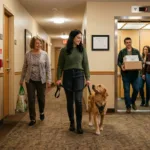

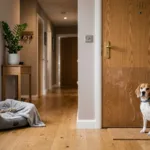
For barking that seems connected to hallway sounds, windows or other identifiable stimuli, looking for the trigger before choosing a response is more useful than treating every episode as the same behavior.
Build the absence around the dog’s actual needs
There is no single alone-time schedule that works for every dog. Puppies generally need more frequent bathroom opportunities and gradual practice with being alone, while older dogs or dogs with health conditions may also require shorter intervals. Adult dogs differ as well in activity level, routine and how comfortably they spend time without people present.
The American Kennel Club reports veterinary-behavior guidance that six to eight hours without an opportunity to relieve themselves should be treated as an upper boundary for many adult dogs rather than a universal daily target. The same guidance stresses that dogs are social animals and that spending the entire day isolated should not be considered an ideal routine simply because a dog can physically tolerate it.
For a renter, the useful question is therefore broader than “How many hours can my dog stay alone?” It is whether the whole day is workable. A morning bathroom break, appropriate activity, access to water and a suitable resting environment all influence what happens later. If the dog regularly needs more than the renter’s schedule can provide, a midday dog walker, trusted person or another appropriate arrangement may be a more realistic solution than repeatedly stretching the absence.
Exercise can contribute to that plan, although it should remain proportionate to the individual dog. A practical apartment exercise routine should be sustainable over ordinary workweeks rather than designed as an extreme attempt to exhaust the dog before departure. Mental activity can complement physical movement as well, provided that toys or food-based enrichment left during an absence are already known to be safe for that particular dog.
The environment deserves equal attention. Water should remain accessible, unsafe items should be out of reach, and the dog should have somewhere comfortable to rest. In a small rental, organizing the apartment around predictable areas for rest, feeding and movement can make alone time easier without requiring permanent modifications.
In an apartment, the building can become part of the problem
A dog may be comfortable with the absence itself and still react repeatedly to what happens outside the unit. Elevators open, delivery workers stop at nearby doors, neighbors return from work and other dogs pass through the hallway. When the renter is home, those sounds may be easy to redirect or barely noticeable; once the apartment is empty, the same stimuli can shape a large part of the dog’s afternoon.
This is why the location of the resting area can matter. If the dog’s bed is beside a front door that transmits every hallway sound, moving it farther into the apartment may reduce unnecessary stimulation. Similarly, a street-facing window can provide harmless visual interest for one dog while keeping another on alert for hours. Layout changes do not solve every behavioral problem, but they can reduce repeated exposure to triggers that are already well understood.
Noise also has consequences beyond the dog. A renter may hear only a few minutes of barking before leaving for work, while the neighbor on the other side of the wall experiences repeated episodes throughout the morning. When someone raises a complaint, specific information is more useful than either dismissing it or assuming the worst. Asking when the barking occurs, how long it tends to last and whether it coincides with hallway activity can provide clues that are impossible to collect from outside the building.
Rental policies vary, so the lease and property rules still matter. As one concrete example, NYCHA requires residents to keep pets from creating excessive noise or a nuisance. That is a NYCHA policy rather than a nationwide standard, but many rental agreements contain their own provisions concerning noise, disturbances or animal conduct. If management sends a written warning, keep the communication and address the specific conduct described instead of relying only on a general belief that the dog is usually quiet.
Property damage can reveal another part of the same picture. Scratches concentrated around the exit, damaged trim or repeated chewing near a door deserve attention because the location and timing can help explain what is happening. Protecting rental floors and doors from dog damage is useful for preventing ordinary wear caused by repeated contact, but a protective covering should not become a substitute for investigating intense escape behavior.
Distress calls for a different response than ordinary boredom
Not every dog that misbehaves while alone has separation anxiety, and applying that label too quickly can obscure simpler explanations. A dog may chew an accessible object because it is appealing, bark at people outside the window or have an accident because the absence exceeded its bathroom needs. The pattern becomes more concerning when several behaviors consistently cluster around separation.
According to the ASPCA, signs associated with separation anxiety can include pre-departure agitation, persistent barking or howling, pacing, house-soiling, destructive behavior around doors or windows and escape attempts that occur during the guardian’s absence. Severe escape attempts can also injure the dog, including damage to paws, nails or teeth.
Confinement needs the same individualized judgment. A crate is comfortable for some dogs that have been gradually accustomed to it, whereas dogs distressed by confinement may become more agitated. The ASPCA specifically cautions that crate confinement can increase stress for some dogs with separation-related problems and may be inappropriate when the dog makes frantic attempts to escape.
Consequently, a renter who discovers intense distress should avoid solving only the visible rental problem. Reinforcing a door or restricting the dog to a smaller area may protect a surface while leaving the underlying behavior unchanged. When a dog is repeatedly injuring itself, showing pronounced distress or making persistent escape attempts, veterinary or qualified behavioral guidance is more appropriate than simply experimenting with stronger containment.
Gradual training can be relevant when separation itself is the problem. The ASPCA describes an approach in which absences begin below the duration that triggers significant anxiety and are increased gradually as the dog becomes able to remain relaxed. That is different from repeatedly leaving the dog for a full workday in the hope that distress will disappear through exposure.
Use the return home to evaluate the routine
What you find after an absence can complete the picture. New damage around a doorway, untouched enrichment, an accident or an unusually agitated dog may be meaningful when the same pattern repeats. On the other hand, an enthusiastic greeting by itself does not establish that the dog spent the entire day distressed.
Look at several absences rather than drawing conclusions from one unusual afternoon. A delivery, construction noise or another uncommon event can temporarily change behavior. Repeated patterns are more useful because they allow you to compare different days and identify whether adjustments are actually helping.
This also gives the renter a practical way to refine the schedule. If the dog settles reliably after a morning walk but becomes restless late in the afternoon, a midday break might address the weak point. If the main problem occurs within minutes of departure regardless of exercise, the evidence points elsewhere. When barking aligns closely with hallway activity, environmental management becomes more relevant.
Over time, a successful arrangement tends to become uneventful. The dog has its normal bathroom and activity opportunities, the apartment offers a comfortable place to settle, predictable building sounds no longer trigger prolonged reactions, and the renter can leave without routinely returning to complaints or damage. That outcome does not require the dog to sleep motionless until the key turns in the lock; it means the period alone has become a manageable part of the household’s ordinary routine.
For apartment renters, that is the standard worth paying attention to. The number of hours matters, but it only makes sense alongside the dog’s behavior, physical needs and the realities of the building in which those hours are being spent.

Alex is the content editor at PetzNews, covering pet care guidance and pet-friendly housing topics for renters and property owners across the United States