
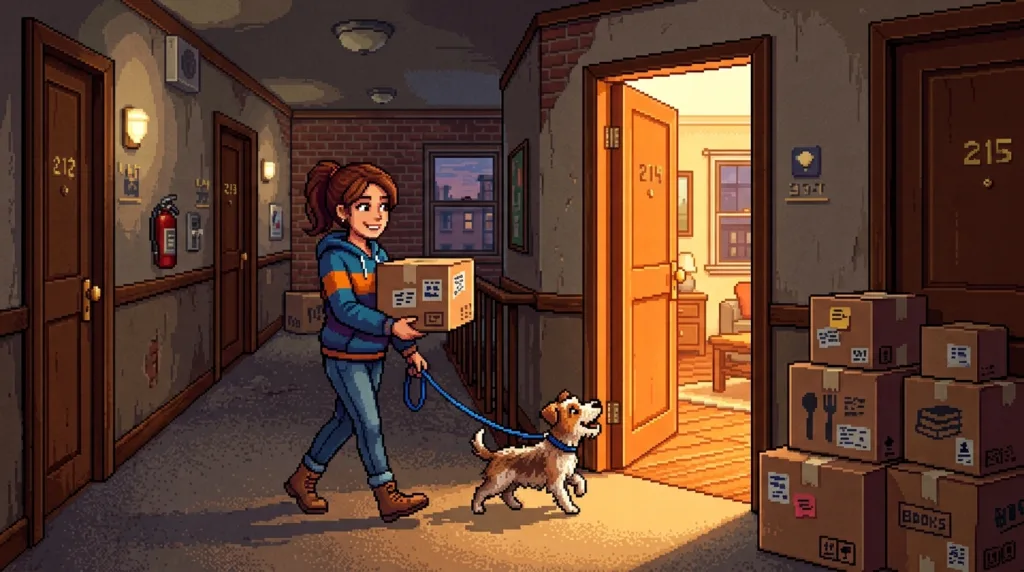
Moving with a dog involves two transitions happening at the same time. The renter is dealing with keys, boxes, utilities, building rules and the condition of the new property, while the dog is losing a familiar environment and being introduced to another one whose sounds, smells and routines have not yet acquired any meaning. Treating the move only as a transportation problem can therefore make the first few days harder than they need to be.
A smoother approach is to preserve continuity where it is useful while accepting that some parts of the dog’s routine will inevitably change. Familiar bedding can move to a different room, for example, and the usual morning walk may follow an entirely new route. The details are different, but the sequence remains recognizable. The ASPCA recommends keeping a pet’s routine as normal as possible during a move and preserving a familiar area while packing is underway. For apartment renters, that stability can be particularly valuable because the dog must also adapt to new hallways, neighbors, elevators, outdoor access and building sounds.
Prepare for the move before the apartment becomes chaotic
Dogs vary considerably in how they respond to packing. Some barely react to a room filling with boxes, whereas others become unsettled once furniture moves, familiar objects disappear and strangers begin entering the home. Because those changes accumulate over several days or weeks, waiting until moving morning to think about the dog can leave very few options.
Where practical, keep the dog’s most important daily items accessible until late in the packing process. The bed, water bowl, leash, food and a few familiar objects do not need to disappear into boxes simply because the rest of the apartment is being dismantled. The ASPCA specifically advises allowing skittish dogs to remain in a familiar room that is packed later and maintaining their normal routine as much as possible. That familiar area does not have to remain untouched; its value comes from giving the dog one relatively predictable part of an otherwise changing environment.
At the same time, prepare a small group of dog supplies that will travel separately from the general moving boxes. Food, medication, leash or harness, water, waste bags, bedding and any other items needed during the first day should be easy to reach when you arrive. If everything the dog needs is buried somewhere behind kitchen equipment and books, rebuilding the normal routine becomes unnecessarily difficult just when consistency is most useful.
There is also a rental task worth completing before attention shifts entirely to the move: confirm that the animal is properly reflected in the new property’s paperwork. If the lease requires pet approval, registration, a pet addendum or another document, resolve that issue rather than assuming a verbal conversation will be enough. For a broader review of moving logistics, the renter’s checklist for moving into a rental with a pet covers the property side of the process separately.


Identification deserves similar preparation. Make sure a collar tag contains usable contact information and, if the dog is microchipped, check that the registration details are current. Moving day temporarily increases the number of open doors, unfamiliar people and moments when the renter’s attention is elsewhere, so outdated contact information is particularly unhelpful at precisely the time it might be needed.
Moving day should reduce access to the chaos, not place the dog in the middle of it
The safest arrangement on moving day often depends less on obedience than on logistics. Even a dog that normally waits politely at the front door may behave differently when movers are carrying furniture through it, hallways are crowded and the household routine has disappeared. Moreover, people helping with the move may not know the dog’s habits well enough to notice an escape risk before it develops.
For that reason, the ASPCA recommends keeping pets in a quiet room with the door closed or arranging for them to stay with a trusted person while movers load the home. Which option works better depends on the dog and the move. A dog that relaxes comfortably with a familiar friend may benefit from spending the busiest hours elsewhere, whereas another may cope better in a secured room away from the front door. What matters is deciding the arrangement in advance instead of trying to contain the dog after loading has already begun.
Transportation also deserves to remain familiar rather than experimental. If the dog rarely travels by car or is expected to use a crate that it does not normally tolerate, introducing that experience gradually before moving day is preferable. ASPCA guidance recommends acclimating pets to crates and vehicle travel through shorter, positive experiences before a longer moving trip. When motion sickness, severe travel anxiety or a health condition is involved, veterinary guidance may be appropriate before the trip.
Once you reach the new rental, there is little benefit in immediately placing the dog in the middle of unloading activity. Doors may again be open, boxes are moving through unfamiliar rooms, and the dog has no established safe location yet. If possible, prepare a secure area first and bring the dog into that space while the most disruptive work continues elsewhere.
This is also the moment when the renter’s documentation should not be forgotten. Before furniture and dog belongings cover the apartment, create a clear record of existing scratches, stains, worn flooring, damaged screens or other conditions that were already present. Documenting the rental before moving in with a pet is particularly useful because marks discovered weeks later can otherwise be difficult to distinguish from changes that occurred after the tenancy began.
Give the new rental a predictable structure before expanding the dog’s world
A newly rented apartment may be physically ready for occupancy but still be confusing from the dog’s perspective. Nothing yet indicates where to sleep, which door leads outside or which noises are harmless parts of the building. Allowing unrestricted exploration is not necessarily dangerous for every dog, but a more deliberate introduction can make it easier to establish a stable routine.
The ASPCA recommends starting pets in a smaller “home base” with familiar bedding, toys, food and water, then gradually expanding access as they become comfortable. For a dog, this might simply mean beginning with the main living area and resting space instead of opening every room immediately. Familiar objects help as well; this is one occasion when replacing the old bed, bowls and toys simply because the renter wants everything in the new home to be new may remove useful continuity for no practical reason.
As the apartment settles, pay attention to how its layout influences the dog’s behavior. A bed placed beside the front door may expose the dog to constant hallway traffic. A large window overlooking a busy sidewalk might become a source of repeated barking. Conversely, a quieter corner that initially seemed inconvenient may turn out to be where the dog rests most easily. Creating a dog-friendly space in a small apartment is less about adding equipment than arranging the space around the way the dog actually uses it.
The route outside requires its own adjustment. In the previous home, the dog probably knew the sequence automatically: front door, hallway or yard, bathroom area, normal walking direction and return. In the new property, elevators, stairs, lobbies and exits may all be unfamiliar. During the first few days, using a reasonably consistent route can help the dog learn where daily outings begin and end before you add more neighborhood variety.
This matters even more in a large apartment building. A dog accustomed to walking directly outside may now need to wait for an elevator, pass other dogs in narrow hallways or cross a busy lobby before every bathroom break. Our guide to elevators, stairs and hallways with a dog in an apartment addresses those shared spaces in detail, but during the move the main objective is simply to avoid expecting instant familiarity with a very different access routine.
The neighborhood can be introduced in the same measured way. A few repeatable walking routes initially give the dog an opportunity to learn the immediate environment, including the path back to the building. Once those outings feel routine, exploring additional streets, parks or pet areas becomes easier to layer onto an already recognizable baseline.
Expect some behavior to change temporarily, then look at the direction it is moving
A move changes much more than the floor plan. The dog may now hear different doors, voices and elevators, encounter unfamiliar animals near the entrance or spend periods alone in a place that has not yet become familiar. Consequently, a behavior that was rare in the previous rental may appear during the first days in the new one without necessarily becoming a permanent problem.
Barking is a good example. Before concluding that the dog has suddenly developed a major behavioral issue, identify whether the new apartment has introduced a recurring trigger. A resting area beside a noisy hallway, a window facing heavy foot traffic or another dog regularly passing the door can all change the dog’s normal response. If barking becomes frequent, identifying when and what triggers it is more informative than assuming the move itself is the entire explanation.
Alone time can also require some recalibration. A dog that previously slept comfortably while the renter worked may initially remain more alert in the unfamiliar apartment. Rather than assuming the old routine transfers perfectly on the first day, observe the first absences when possible and look for whether the dog begins settling more easily as the environment becomes familiar. Leaving a dog home alone in an apartment becomes a separate concern if barking, escape behavior or significant distress persists.
Not every adjustment should be interpreted behaviorally, either. Appetite changes, persistent gastrointestinal problems, pain, unusual lethargy or other health concerns should not simply be attributed to the move without appropriate attention. Likewise, a dog that is frightened enough to injure itself or remains intensely distressed deserves more than an assumption that time alone will solve the problem.
For ordinary adjustment, however, progress is better judged over several days than several minutes. The useful signs are often modest: the dog begins choosing a resting place without following the renter constantly, returns to a normal eating routine, stops investigating every hallway sound or navigates the route outside with less hesitation. Those changes indicate that the environment is becoming more predictable.
Maintaining familiar daily sequences can support that process. If breakfast normally follows the first walk, preserve the order when practical. If evenings usually include a particular walk and then rest, keeping that rhythm provides continuity even though the streets and apartment have changed. The AKC similarly recommends re-establishing a dog’s normal routine promptly after moving and keeping familiar belongings available while the dog adjusts.
There is no need to fill the first weekend with every new experience the neighborhood offers. Dog parks, unfamiliar visitors, long excursions and several new social encounters can wait if the dog is already processing the new building and household setup. Gradually expanding the routine gives the renter a clearer view of what the dog handles comfortably and what may need more time.
By the end of the first couple of weeks, the most useful review is practical rather than ceremonial. Check whether the dog has a stable resting area, can move through the building with reasonable comfort, has resumed an appropriate eating and bathroom routine, and can handle the household’s normal periods of absence. At the same time, look at the rental itself for any new pressure points—scratching near a door, repeated moisture near bowls or another pattern that is easier to address early than at move-out.
A successful transition does not require every detail of the previous home to be recreated. What matters is preserving enough continuity for the dog to learn the new environment without having to solve every change at once, while the renter establishes routines that are realistic for the property where they now live.

Alex is the content editor at PetzNews, covering pet care guidance and pet-friendly housing topics for renters and property owners across the United States