
A rental listing says “pets allowed.” Another says “cats and dogs welcome.” A third mentions “small caged pets.”
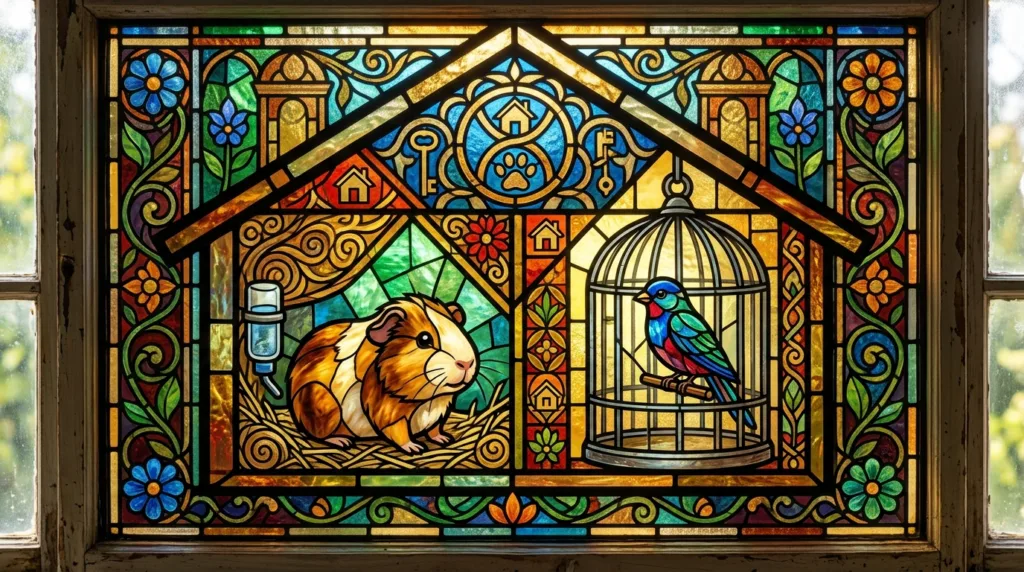
None of those phrases, by itself, tells a renter whether a rabbit, guinea pig, hamster, bird or another small animal is actually permitted.
That uncertainty matters because rental pet policies are often written around categories rather than around the animal sitting in your home. A landlord may distinguish dogs and cats from small mammals, birds, reptiles or fish; another policy may list individual species; a third may require approval for any animal that is not specifically named.
Official consumer guidance from Georgia, for example, notes that landlords may restrict the number, size or type of pets permitted in a rental. The practical question for a renter with a small pet is therefore not simply whether the property is “pet-friendly.” It is whether the written policy includes that particular animal under terms that work for the household.
Translate the policy into a species-level answer
Broad pet language is useful for screening listings, but it is not precise enough for a lease decision.
Consider how differently these common phrases can function:


| Policy wording | What it does not tell you |
|---|---|
| Pets allowed | Which species, how many, or whether approval is required |
| Cats and dogs allowed | Whether other animals are also permitted |
| Small pets allowed | How the property defines “small” or “pet” |
| Caged animals allowed | Which species qualify and whether a specific enclosure is required |
| Common household pets only | Which animals the property includes in that category |
| Pets subject to approval | What criteria management uses before granting approval |
The gap between the label and the actual rule is where misunderstandings begin.
A rabbit may weigh less than many cats, yet that does not mean a policy describing “small pets” automatically includes rabbits. Likewise, a guinea pig normally lives in an enclosure, but the phrase “caged pets permitted” is not enough to establish that the property accepts guinea pigs unless the policy or management confirms it.
Real policies illustrate the problem. The Raleigh Housing Authority’s current public-housing pet policy identifies hamsters, gerbils and guinea pigs as permitted small mammals, but it specifically lists rabbits among animals that are not permitted unless otherwise addressed by management. By contrast, the New York City Housing Authority states that reasonable quantities of small caged animals such as hamsters, gerbils and guinea pigs, along with certain small birds and fish, are permitted under its policy.
Those are policies for specific housing authorities, not nationwide rules. Their value here is the contrast: two housing providers can both regulate “small pets” while drawing the species boundaries differently.
If your animal is not clearly named, do not resolve the ambiguity by choosing the interpretation you prefer. Ask management what the policy means for the exact species you intend to keep.
Species is only the first layer of the rule
Even when a small pet is permitted, approval may come with conditions that are easy to miss if the renter stops reading after finding the animal’s name.
Number limits are one example. A policy might allow two birds but only one small mammal, or it might calculate animals by enclosure rather than simply counting individuals. Aquarium limits may be expressed in gallons rather than number of fish. Other properties can place a general household cap across all pets.
This is why rental limits on the number of pets should be read together with species-specific language rather than treated as a separate issue. A tenant with two guinea pigs, for example, needs to know whether the policy regards them as two pets, one permitted enclosure or an arrangement that exceeds the property’s limit.
Enclosure rules can add another layer. Some policies require certain animals to remain housed in an appropriate cage, tank or enclosure, while others regulate aquarium size or prohibit modifications made to accommodate the animal.
The Raleigh Housing Authority policy demonstrates how detailed such provisions can become: it sets separate number and size standards by animal category and also restricts residents from altering the property to create animal enclosures. Those requirements are specific to that program, but they show why “the species is allowed” may still be only the beginning of the review.
For a renter, the useful questions are concrete:
Does the policy limit the number of these animals?
Is there a maximum enclosure or aquarium size?
Does management require the animal to remain contained?
Are there restrictions on where the enclosure can be placed?
Would accommodating the animal require a modification that the lease does not permit?
The answers matter particularly for animals whose housing occupies substantial floor space. A rabbit exercise area, large guinea pig enclosure or bird setup can interact with the rental very differently from a small hamster habitat, even if all of them are casually described as “small pets.”
Do not assume the pet fee tells you what is allowed
Another source of confusion is the fee schedule.
A property may advertise a pet deposit, pet fee or monthly pet rent without making clear whether those charges apply to every permitted species. Conversely, the absence of a charge for small animals does not automatically establish that they are permitted.
Permission and cost are separate questions.
Before applying, first establish whether the animal is allowed. Then determine whether that category is subject to a deposit, fee, monthly charge or registration requirement. Our guide to pet deposits, pet fees and pet rent explains the differences between those charges; the important point here is not to use a pricing page as a substitute for the actual pet policy.
The same applies to online application forms. If a form offers only “dog” and “cat” in a dropdown menu, that could mean the property does not accept other animals, but it could also mean the application system was designed around the most common categories. The software interface is not a reliable interpretation of the lease.
When the species is not represented clearly, ask before paying a nonrefundable application fee or acquiring the animal for that property.
Look beyond the lease page titled “Pets”
Small-pet rules are not always located in one paragraph.
The basic lease may say that pets require approval, while a separate pet addendum defines eligible animals. Community rules may govern odors, noise, waste or common areas. An aquarium restriction could appear in a property-damage or insurance section rather than under the pet heading.
That makes document hierarchy important. As discussed in our guide to reviewing pet rules before signing a lease, renters should read the lease, pet addendum and incorporated community rules together rather than isolating a single sentence.
For a small pet, pay particular attention to terminology that might seem unrelated at first. Words such as animal, pet, household pet, exotic animal, livestock, rodent, bird, reptile, aquarium, enclosure and cage can all affect the answer.
“Exotic animal” deserves special caution because everyday and policy meanings may differ. A renter may think of an unusual wild species when reading the term, while a particular housing policy may use it much more broadly. Do not assume your own definition matches the one used by the property.
The same problem can arise with “rodent.” Guinea pigs, hamsters and gerbils may be grouped together in one policy, while another document may name species individually. Rabbits are not rodents biologically, but a rental document may still place them within a broader small-animal category or regulate them separately. The wording of the actual policy is what needs to be clarified.
Get ambiguous permission in writing
A verbal “that should be fine” is not as useful as a clear written answer tied to the animal you actually have.
If the lease is explicit, there may be little to clarify. When it is not, a short written question can remove substantial uncertainty:
“Does the property’s pet policy allow two guinea pigs kept in an indoor enclosure?”
That is better than asking, “Do you allow small pets?” because it forces the answer to address species, number and basic housing arrangement at the same time.
If management approves an animal that the standard policy does not clearly mention, ask how that approval will be documented. Depending on the property, it may appear in a pet addendum, lease amendment, written management approval or another formal record.
The Texas Attorney General’s renter guidance emphasizes that the rental agreement is a central source for understanding the landlord-tenant relationship and recommends putting agreed changes to lease terms in writing. Although state law and procedures vary, written clarification is practically useful anywhere a policy is ambiguous.
Keep that approval with the lease rather than relying on an old text message you may struggle to locate months later. If ownership or property management changes, a clear document is much easier to interpret than a renter’s memory of a conversation during the application process.
The animal still has to fit the property rules after approval
Permission to keep the species does not eliminate the renter’s other responsibilities.
A housing provider may regulate sanitation, odor, property damage or disturbances regardless of whether the animal is a dog, guinea pig or bird. NYCHA, for example, permits specified small caged animals while also requiring pets to be maintained without creating a nuisance, excessive noise, unsafe conditions, unsanitary conditions or property damage.
For small pets, those responsibilities show up in species-specific ways.
A guinea pig enclosure creates bedding and waste that must be managed. A rabbit may interact with flooring, baseboards or cords if given exercise time outside its enclosure. Birds can create noise and scattered food or feathers. Aquariums introduce water weight and leak risk.
Those practical differences are why the next articles in this series treat rabbits, guinea pigs and birds separately rather than grouping all “small pets” into one care guide. The lease question may begin with permission, but living successfully in the rental depends on how the particular animal uses the property.
This distinction also helps when reading a pet policy. A rule requiring the unit to remain sanitary is much broader than a rule identifying which animals may live there. Both can apply at the same time, and satisfying one does not replace the other.
Assistance animals are a separate housing question
Ordinary pet rules should not be used automatically to answer questions about an assistance animal.
HUD explains that the Fair Housing Act may require a housing provider to make a reasonable accommodation involving an assistance animal when the applicable disability-related requirements are met, including situations involving a property with a no-pets policy.
That is a different legal framework from deciding whether an ordinary rabbit, bird or other small pet is permitted under a lease. Our separate guide on why assistance animals are not treated the same as pets in housing addresses that distinction in detail.
Do not assume that calling an animal an emotional support animal automatically settles the issue, and do not assume that an ordinary pet restriction automatically resolves an assistance-animal request either. Because the legal analysis can depend on individual circumstances, assistance-animal questions deserve to be handled separately from an ordinary small-pet approval.
Before relying on “pet-friendly,” find the exact sentence that covers your animal
For dogs and cats, many rental policies provide recognizable categories immediately. Small-pet owners often have to look one level deeper.
The useful answer is not that the property accepts “pets.” It is that the documents or a written approval establish what happens with your species, your number of animals and your intended setup.
If those three points are clear, the rest of the pet policy becomes much easier to evaluate: costs, enclosure requirements, sanitation obligations, modification limits and other responsibilities can be read against an animal that is already confirmed as permitted.
If they are not clear, resolve the ambiguity before signing the lease or bringing the animal into the property. Small does not mean automatically exempt, automatically allowed or automatically prohibited. In rental housing, the category only becomes useful once you know what the property means by it.

Alex is the content editor at PetzNews, covering pet care guidance and pet-friendly housing topics for renters and property owners across the United States