
Apartment size matters less to a cat than the way that space can be used.
A renter may look at a one-bedroom apartment and see a limited number of square feet. A cat experiences the same home through several overlapping territories: the floor, furniture, windows, elevated surfaces, hiding places, scratching locations and the routes connecting them. Consequently, a relatively small apartment can provide a varied environment when those resources are distributed thoughtfully, while a larger but poorly arranged home may offer surprisingly little choice.
That distinction is useful because living with a cat in a rental creates two responsibilities at once. The apartment needs to support normal feline behavior, but the renter also has to protect surfaces, comply with pet rules and avoid permanent modifications that the lease does not allow. The most practical setup is therefore not one that tries to prevent the cat from behaving like a cat; it gives those behaviors appropriate places to happen.
Use the apartment in more than two dimensions
Floor space is the obvious limitation in a small apartment, yet cats do not rely on the floor alone. Elevated areas can expand the usable environment without increasing the size of the rental, while hiding and resting locations give the cat options when it wants distance from household activity.
The Feline Veterinary Medical Association’s guidance on feline environmental needs emphasizes vertical space, hiding options, safe resting places and separated resources as important parts of an indoor cat’s environment. A cat tree, stable perch or appropriately positioned piece of furniture can therefore provide more than entertainment: it gives the animal another level from which to rest, observe or withdraw.
For a renter, the useful question is not how much cat furniture can fit into the apartment. It is where an elevated option actually improves the space. A perch near a suitable window may provide visual stimulation, whereas another placed beside a noisy entry door might expose a cautious cat to constant hallway activity. Likewise, a tall structure that blocks the only practical route through a studio apartment may create more inconvenience than value.
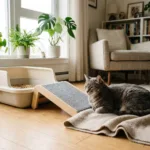


Before mounting shelves or making other permanent changes, check the lease. Freestanding solutions are often easier to adapt to a rental because they can move with the household and do not require drilling into walls. That same principle becomes especially important when planning window and balcony safety for cats, since a useful elevated space should not create access to an unsafe opening.
The broader aim is to create choice rather than simply height. Some cats prefer a high perch; others regularly retreat under a bed or into an enclosed resting spot. In either case, the apartment becomes more usable when the cat can choose between being involved in household activity and stepping away from it.
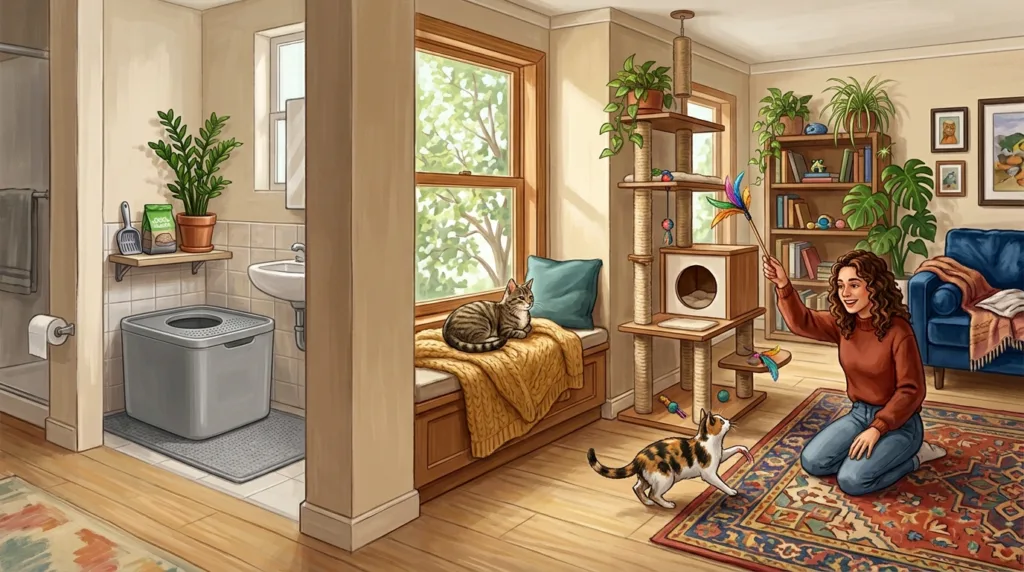
The litter box influences more of the apartment than renters expect
In a small home, the litter box is both a cat resource and a space-planning decision. Hiding it wherever there happens to be an unused corner may solve the human problem of visibility while creating a poor route or an unpleasant location for the cat.
A useful litter-box location needs to be accessible and relatively quiet. Placing it beside a machine that starts suddenly, behind an obstacle or in an area where another animal can block the path may make the location less workable. At the same time, renters understandably want some separation between the litter area and places where food is prepared or eaten.
Current CDC guidance recommends keeping litter boxes away from food-preparation areas and cleaning them daily. For multi-cat households, the agency also advises providing a litter box for each cat plus an additional box. Those recommendations can require more planning in an apartment because adding another box is not trivial when every corner already has a purpose.
Instead of treating the litter box as an object that needs to disappear, think of it as part of the floor plan. The detailed article on where to put a litter box in a small apartment focuses on that tradeoff between accessibility, privacy, hygiene and limited space.
Maintenance matters just as much as placement. An easily accessible box that is rarely cleaned can still create odor and may become less acceptable to the cat. Conversely, moving a box repeatedly because the renter is trying to find a less visible location can disrupt an arrangement that was already working. Once a suitable place has been established, consistency usually has practical value.
Odor should also be managed at its source rather than disguised with fragrance. Regular removal of waste, appropriate litter-box cleaning and attention to surrounding surfaces are more useful than trying to perfume the room. The separate guide on controlling litter box odor in a rental apartment goes further into that issue because cleaning choices also need to be compatible with the rental property.
Give scratching a destination before it finds one
Scratching is one of the clearest examples of a normal feline behavior colliding with rental-property concerns. A cat may choose a sofa, door trim, carpet edge or another surface not because it is “misbehaving,” but because the location and material satisfy the behavior particularly well.
The ASPCA and feline-behavior guidance both recognize scratching as normal cat behavior. Cats differ, however, in the surfaces and orientations they prefer. Some use tall vertical posts, while others prefer horizontal cardboard or another texture. Placement matters as well because cats often scratch in parts of the home they already use, including near resting areas and routes through the territory.
That means placing one scratching post in an unused corner and assuming the problem has been solved may not be enough. If a cat repeatedly scratches one end of the sofa, putting an appropriate scratching surface nearby is generally more relevant than placing the post on the opposite side of the apartment because that location looks tidier.
Observation helps here. Notice whether the cat scratches after waking, near a doorway, beside a favorite resting area or along a particular route. Those patterns can guide where acceptable scratching surfaces belong.
For renters, early prevention is considerably easier than repairing damage later. Our guide on protecting a rental from cat scratching deals specifically with furniture, walls, carpet and trim while keeping modifications compatible with a rental. The important principle at this stage is simpler: provide attractive legal targets before the apartment itself becomes the preferred scratching surface.
Windows can be enrichment and a safety problem at the same time
Windows often become important places in an indoor cat’s territory because they combine elevation, daylight, outdoor movement and changing visual information. A cat may spend substantial portions of the day observing birds, people or neighborhood activity without needing a large amount of floor space.
That makes a window perch potentially valuable, but the opening itself needs separate consideration. Screens are not automatically designed to support a cat’s weight or resist persistent pressure, and a partially open window can create risks depending on its design. Balconies introduce additional concerns because railing gaps, ledges and height vary considerably between properties.
For that reason, the most attractive view in the apartment should not automatically become unrestricted cat access. Evaluate the physical opening first, then decide how the cat can use the location safely. The dedicated guide on making apartment windows and balconies safer for cats addresses screens, openings and rental-compatible precautions in more detail.
There is also a behavioral side to windows. One cat may watch outdoor activity quietly, while another becomes highly aroused by animals outside or repeatedly scratches at the window. As with scratching and litter-box placement, the response should follow the pattern actually occurring in the apartment rather than an assumption that every cat benefits from the same setup.
Indoor life still needs movement, play and opportunities to investigate
Cats are often described as easier apartment pets because they do not require outdoor bathroom walks. That convenience is real, but it can lead renters to underestimate how much the indoor environment matters.
Feline environmental guidance recommends giving indoor cats opportunities for play, simulated hunting or foraging, scratching, climbing, hiding and resting. These needs do not require a large collection of products. A few well-chosen resources, combined with regular interaction, can provide substantially more variety than leaving many toys on the floor indefinitely.
Play works especially well when it allows the cat to stalk, chase or pounce in a controlled way. Toys can also be rotated rather than left available permanently, which changes the environment without occupying additional space. Meanwhile, food puzzles or other suitable enrichment may add another form of activity for cats that use them comfortably.
The apartment layout can support this naturally. An open strip of floor may be useful for interactive play, while an elevated perch offers a different kind of activity. A cardboard box can provide temporary hiding and exploration before being recycled. Because these resources serve different functions, the renter does not have to turn an entire room into a permanent “cat area.”
What matters more is whether the cat has opportunities to make choices during the day. A home in which food, water, sleeping, scratching and observation all happen within the same two-foot corner technically contains the necessary objects, yet it offers little spatial variety. Distributing those resources where practical makes better use of the apartment without adding square footage.
Protect the rental by understanding how the cat uses it
Rental damage is easier to prevent when it is linked to a recognizable behavior rather than treated as a general risk of pet ownership. Scratching may concentrate on one doorway. Litter can spread repeatedly from one box. Water may collect around the same bowl. A cat that jumps to one particular window may use the same piece of furniture as a launch point every day.
Once those patterns are visible, protection can become targeted. A suitable litter mat may help around the box, an appropriate scratching surface can redirect contact from trim, and renter-compatible floor protection may make sense in one high-use area rather than across the entire apartment.
The lease remains relevant as well. Cat approval does not necessarily mean every change to the property is permitted, and a renter should not assume that mounting shelves, installing permanent barriers or modifying screens is acceptable simply because the changes are intended for the animal. Reviewing the rental’s pet rules and related lease terms helps separate ordinary pet permission from permission to alter the property.
Documentation also has value at the beginning of the tenancy. Existing carpet pulls, scratched trim or damaged screens can later be difficult to distinguish from new damage if the move-in condition was never recorded. This is especially relevant for cat owners because several normal feline behaviors interact directly with surfaces that may already show wear.
A practical cat-friendly apartment therefore depends less on trying to shield every inch of the rental and more on noticing where ordinary behavior repeatedly meets the property. That approach protects the home without turning the cat’s environment into a collection of restrictions.
Let the setup evolve as you learn the cat’s preferences
It is tempting to plan the entire apartment before the cat arrives and assume that every choice is final. In practice, some of the most useful information comes only after watching how the cat uses the home.
Perhaps the expensive bed is ignored while a quiet chair becomes the preferred sleeping place. The scratching post may be perfectly sturdy but in the wrong location. A window that seemed ideal might produce too much stimulation, while another part of the apartment becomes a reliable resting area.
Those observations are not failures in planning. They are part of making the environment fit the individual cat.
Changes should be deliberate rather than constant, particularly around resources such as the litter box. However, furniture placement, scratching options, resting areas and play spaces can be adjusted as patterns become clearer. Cats benefit from familiarity, yet familiarity does not require preserving a setup that consistently creates friction.
This becomes particularly relevant after a move. A new apartment changes routes, sounds, hiding places and window views, so the arrangement that worked in the previous rental may need some adjustment. The article on moving with a cat to a new apartment will address that transition separately, including how to introduce the new space without changing every familiar element at once.
For everyday apartment living, the most useful standard is whether the home gives the cat reliable access to its basic resources while leaving enough choice for normal behavior. If litter, scratching, rest, observation and activity all have workable places, limited square footage becomes only one part of the housing equation rather than the defining one.

Alex is the content editor at PetzNews, covering pet care guidance and pet-friendly housing topics for renters and property owners across the United States