
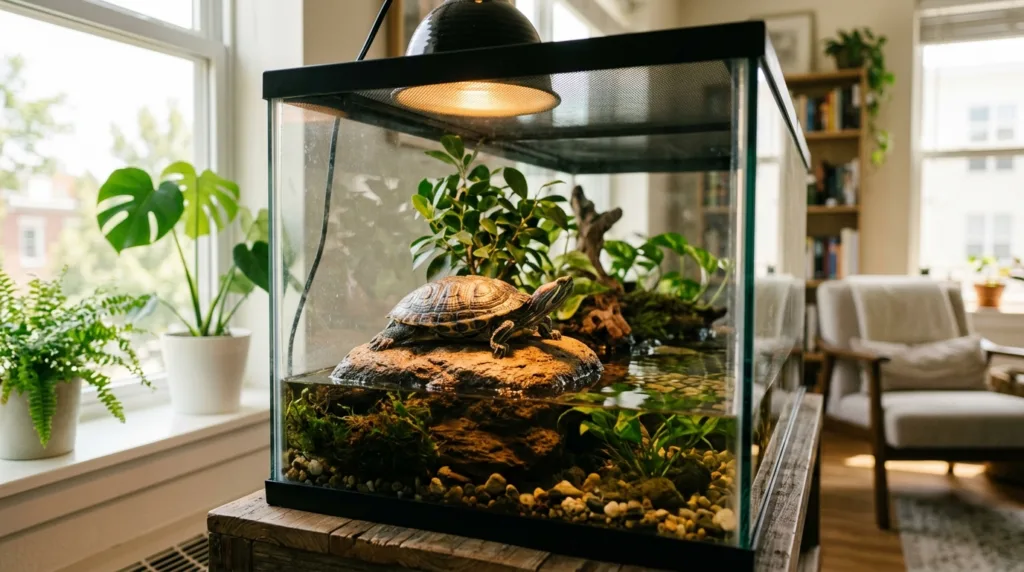
Taking on a turtle or tortoise is rarely a weekend impulse—these animals ask for habitat systems, engineering trade-offs, and a multi-decade commitment. For apartment renters that means more than “Do I have space?”; it means weighing floor loading, water volume and filtration, lighting geometry, long-term relocation plans, and whether your lease (and future life changes) will allow the animal to stay with you for decades. This article reframes the conversation: treat reptile ownership as a habitat-systems project plus an estate-level responsibility, not a low‑maintenance trial.
Thesis: Treat Reptiles as Long-Term Habitat Systems
What many prospective reptile owners call “low maintenance” misses the point. Turtles and tortoises are living systems that require engineered environments—water filtration, basking microclimates, UVB delivery, substrate management, diet plans and predictable care routines. For renters, the core question is not simply “Can I afford this?” but “Can my apartment accommodate the habitat system and will my housing situation permit this animal over years or decades?”
Three Broad Categories: Aquatic, Semi-Aquatic, and Tortoises
Understanding the species category is the most important early decision because it defines the systems you will build and maintain.
- Aquatic turtles (example: red-eared sliders) spend most time in water and need a large, filtered aquarium with a dry basking area and closely positioned UVB and heat sources.
- Semi-aquatic species (example: some map turtles, painted turtles) split time between water and land; they demand both reliable water filtration and more extensive, walkable “shore” or land space.
- Tortoises (example: Russian tortoise, sulcata tortoise) are primarily terrestrial and require floor space, substrate depth, temperature gradients, and different humidity control. They do not swim, but they do need access to shallow water for soaking and drinking.
Federal and Public-Health Constraints to Factor In
Some constraints are non-negotiable. U.S. federal law bars the commercial sale and distribution of turtles with shells under four inches for public‑health reasons; small turtles have been linked to Salmonella outbreaks historically. The Centers for Disease Control and Prevention offers guidance for households considering reptiles and risks for children and immunocompromised people. Review CDC reptile guidance before adopting, and consult a physician if anyone in the home falls into a higher-risk category.
Also consider conservation and invasive-species rules: the U.S. Fish & Wildlife Service and state wildlife agencies regulate trade in many species and prohibit release into the wild. When in doubt about a species’ legal status or release rules, check USFWS guidance and your state wildlife agency.
Habitat Systems: Equipment, Water, Lighting and Weight
Below are the key systems you will manage and the apartment constraints they create.

Water and Filtration (Aquatic / Semi-Aquatic)
- Tank volume: adult aquatic species often need 75–100+ gallons. That weight adds up quickly: a 75-gallon tank filled with water can exceed 600–700 pounds when you include the stand, substrate, and decor.
- Filtration: mechanical and biological filtration rated for several times the tank volume is necessary; turtle waste loads are higher than fish per unit biomass.
- Water changes and plumbing: plan for partial water changes and a safe place to dispose of water without contaminating food prep areas.
Heating and UVB Lighting (All Categories)
- UVB is essential for calcium metabolism; replace bulbs according to manufacturer timelines because UV output declines before visible light does.
- Heat lamps and ceramic heat emitters create thermal gradients; positioning is as important as wattage. For tortoises this means warm basking zones and cooler retreat areas across the enclosure footprint.
Physical Load and Lease Considerations
Whether you’re worried about a tank’s weight on a second‑story floor or a tortoise’s roaming potential, the lease and the building’s structural limits matter. Before purchase, confirm whether your building has explicit weight limits or restrictions on tanks. If the lease is ambiguous, get written permission.
Lease Matrix: Species vs. Common Lease and Building Concerns
| Factor | Aquatic Turtles | Semi-Aquatic Species | Tortoises |
|---|---|---|---|
| Typical enclosure | Large aquarium (75–150+ gal) + stand + filter | Mid-to-large tank with larger land area or custom paludarium | Floor pen or custom insulated enclosure with substrate |
| Weight / structural concern | High — 600+ lbs possible; check floor loading | Moderate to high — depends on water volume | Low weight, high footprint — space and flooring abrasion |
| Water/filtration needs | Intensive — daily/weekly maintenance | Intensive for water; land area needs cleaning | Low water, regular spot-cleaning and substrate maintenance |
| Lighting complexity | High — UVB within inches of basking surface | High — UVB and heat for land areas; water heating considerations | High — broad UVB coverage and ambient warmth across pen |
| Lease friction points | Weight limits, water damage risk, noise from filters | Same as aquatic; plus potential for odors if not maintained | Floor-space rules, substrate that may track, plant/landscape concerns |
| Typical lifespan | 20–40+ years | Varies by species | Often 50+ years; some species live much longer |
Note: These are generalized categories. Species-specific needs can vary significantly; always review husbandry guides for the exact species you plan to adopt and consult an exotics veterinarian.
Equipment Checklist and a Simple Weight Calculation Example
Below is a practical equipment list followed by a conservative weight example for a 75-gallon aquatic setup. Use it when discussing plans with a landlord or a structural engineer if necessary.
| Item | Purpose |
|---|---|
| Aquarium or enclosure | Holds water or substrate and animals |
| Stand or support | Distributes weight—must be level and rated |
| High-flow canister filter | Manages bio-load for turtles |
| UVB lamps and fixtures | Essential for bone and shell health |
| Heat lamps/emitters and thermostats | Provide secure thermal gradients |
| Basking platform and ramps | Allow reptiles to dry and thermoregulate |
| Substrate and hide areas | Species-appropriate flooring and security |
| Water test kits and siphons | Maintenance and water changes |
| Food and supplement storage | Maintain consistent diet and calcium/VD3 regimen |
Sample weight calculation (approximate): 75 gallons of water = about 625 lbs (water alone). Add 40–80 lbs for aquarium glass and frame, 20–60 lbs for substrate/decor, and 40–100 lbs for a wooden/metal stand—conservative total: 725–850+ lbs. If you are on an upper floor, discuss with your landlord or building management before installing.
Life Stages, Rehoming and Estate-Level Planning
A fundamental but often ignored question: who will care for this animal decades from now? Tortoises in particular frequently outlive initial owners. Incorporate rehoming and legacy planning into your choice. That means:
- Identifying local reptile rescues or sanctuaries and understanding their intake policies.
- Putting written care and ownership instructions in your estate documents.
- Discussing potential future housing scenarios—moving to a jurisdiction with different rules, changes in household health, or new partners—and whether the plan still makes sense.
For renters actively looking for reptile-friendly housing, preparatory materials can improve outcomes. Create a concise pet-resume and reference veterinary records when applying. Our pet resume and rental application guide offers templates and negotiation tips that are useful when you need written permission.
Practical Pre-Adoption Checklist
| Question | Action |
|---|---|
| Does my lease allow reptiles? | Review lease; obtain written permission if needed. Ask about weight limits and water damage policy. (See our apartment-hunting questions for renters seeking pet-friendly units.) |
| Are there vulnerable household members? | Consult CDC guidance and a physician if someone is very young, elderly, or immunocompromised. |
| Can I meet habitat systems needs? | List equipment and calculate weight/space requirements; plan for maintenance time and cost. |
| Have I verified legal status? | Check federal and state rules on the species and sourcing. Do not purchase protected species. |
| Do I have a long-term rehoming plan? | Identify rescues, document care instructions, and include the animal in your long-term planning. |
| Do I have a local veterinarian? | Find an exotics vet who will accept the species and review preventive care costs. |
If you are still apartment-hunting, incorporate reptile ownership into your search questions. Our pet-friendly apartment hunting questions resource provides phrasing you can use when screening landlords. After you accept a unit, use a moving checklist to manage the logistics of relocating an animal: see our moving day checklist for pets and renters.
How to Negotiate with Landlords and Reduce Friction
Good documentation reduces surprises. Offer to provide:
- A pet resume including species care summary and vet references.
- A written maintenance plan that outlines cleaning schedules, spill/accident procedures and tenant responsibilities for water disposal.
- Proof of renter’s insurance review—note: some policies exclude certain animals or species; ask your insurer whether reptiles are covered and whether additional endorsements are available. Be cautious in making legal or insurance claims; always verify with your policy provider.
Three Quick Red Flags That Should Stop You
- The seller offers a sub‑four‑inch turtle at an unusually low price—this may be illegal and a public-health risk.
- Your lease explicitly forbids “aquaria” or “exotic animals” and management will not provide a written exception.
- No local exotics veterinarian sees the species in your area, making preventive and emergency care difficult to access.

Alex Tex writes about pets, rental housing, and everyday life with animals in the United States. After living in multiple rental homes and apartments and spending years caring for pets, he focuses on the practical challenges renters face — from lease rules and apartment routines to behavior, safety, and property care.