
Senior-cat care is not mainly about making an apartment look older-cat friendly. It is about noticing which daily tasks have become harder and changing the environment before a small difficulty becomes a fall, missed meal, litter-box avoidance, dehydration, or hidden pain. A low-entry litter box, a stable step, a warmer resting place, or a second food station can be more important than an expensive new bed if it solves the actual obstacle.
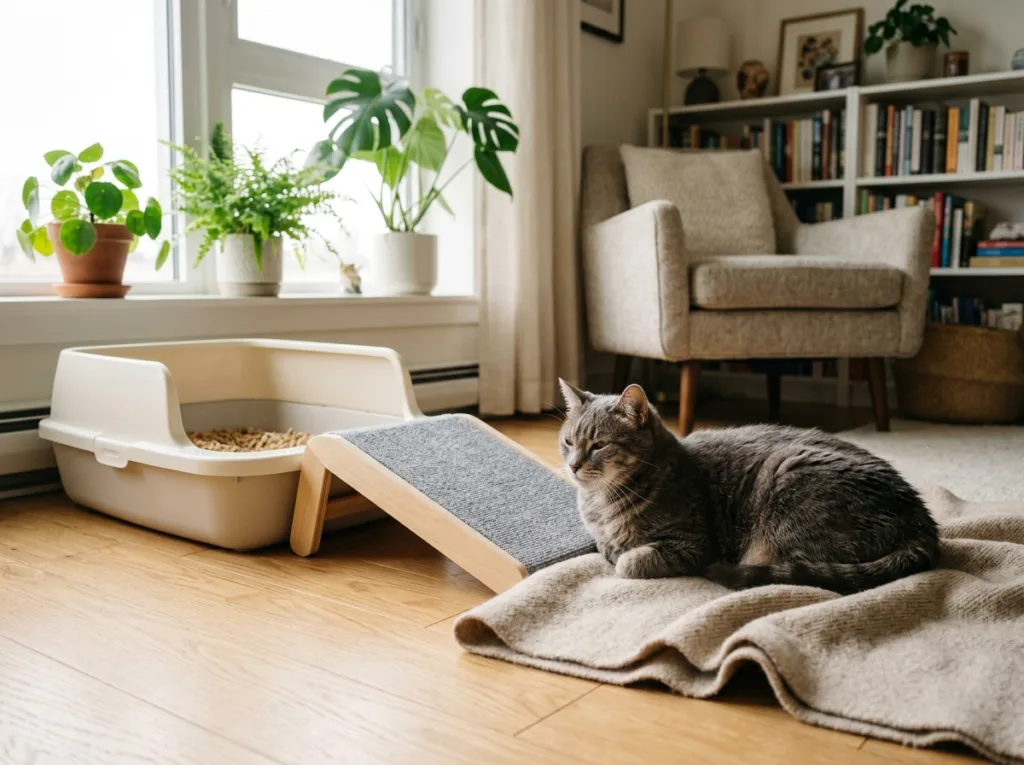
The central thesis is environmental adaptation should follow function, not age alone. A cat does not need the same apartment at seven, twelve, and fifteen, and two cats of the same age may have very different mobility, vision, dental, kidney, or cognitive needs. Cornell’s Feline Health Center emphasizes that age itself is not a disease and that changes in behavior or physical condition should not be dismissed as “just getting old.”
This is general senior-cat information, not veterinary advice. The Cornell Feline Health Center senior-cat guide and the AAFP senior-care guidelines both connect aging care with observation, pain, mobility, nutrition, quality of life, and environmental adjustment. A cat with appetite loss, weight loss, repeated vomiting, urination changes, breathing difficulty, confusion, pain, or a sudden behavior change should be evaluated by a veterinarian.
Begin with the tasks, not the shopping list
Walk through a normal day from the cat’s perspective. Can the cat reach food and water without stairs? Can it enter the litter box without a painful jump? Can it reach a preferred resting place and descend safely? Can it groom, stretch, turn around, and hide without being blocked by another animal? Does the apartment stay comfortable at night, when vision and mobility may be less reliable?
| Daily task | Possible barrier in an apartment | Adjustment to consider | Signal that needs veterinary attention |
|---|---|---|---|
| Using the litter box | High sides, stairs, distance, slippery floor, crowded location. | Low-entry box on the same level as the cat’s main living area; stable footing and easy access. | Straining, repeated accidents, blood, pain, or sudden avoidance. |
| Eating and drinking | Bowls across stairs, competition, noise, or a painful posture. | Multiple quiet stations, non-slip mats, and a comfortable height if advised. | Reduced appetite, weight loss, increased thirst or urination. |
| Reaching resting spaces | High furniture, slippery jumps, blocked routes, or no warm option. | Ramps, steps, lower beds, and a predictable path to preferred spaces. | Reluctance to jump, stiffness, hiding, or sudden withdrawal. |
| Grooming and movement | Arthritis, obesity, dental pain, overgrown claws, or inaccessible surfaces. | Gentle grooming support, scratching options, and clear non-slip floor routes. | Matting, odor, reduced grooming, painful handling, or changes in gait. |
Age is a prompt to observe, not a diagnosis
Cornell notes that many cats begin experiencing age-related physical changes between seven and ten years, and most do so by around twelve, but cats are individuals. Senior status should prompt closer observation, not an assumption that a new behavior is inevitable. Arthritis, dental disease, kidney disease, hyperthyroidism, hypertension, diabetes, vision loss, and cognitive changes can all affect how a cat uses the home.
A cat that stops jumping may have pain, not simply a new preference for the floor. A cat that misses the litter box may be unable to climb in, may be producing more urine because of disease, or may be avoiding a soiled box. A cat that hides may be stressed, painful, or unwell. Environmental changes can reduce the burden, but they should not be used to explain away a clinical sign.
The litter box is a mobility test in disguise
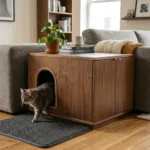
Many owners judge a litter box by whether it fits the room. A senior cat experiences it as a sequence of movements: approach, step over the edge, turn, squat, dig, exit, and walk away. Joint pain or weakness can make any part of that sequence difficult. Cornell specifically notes that arthritic cats may struggle to reach food, water, or litter boxes when stairs or jumping are involved.
Use a low-entry box that is large enough for the cat to turn comfortably, place it where the cat already spends time, and keep the route clear. In a multi-level apartment, provide access on the levels the cat actually uses rather than forcing a painful trip to one distant box. Keep boxes clean and monitor whether the cat enters, circles, vocalizes, or eliminates beside the box.
Do not respond to repeated accidents only by adding stronger litter fragrance or punishing the cat. Urinary disease, constipation, pain, kidney disease, diabetes, and mobility limitations can all be relevant. The location of the accident and the cat’s posture can provide useful information for the veterinarian.
Make vertical space optional, not mandatory
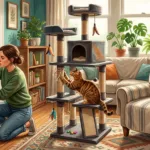
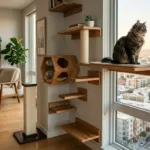
Cats often value height, but an aging cat may no longer be able to access a tall tower safely. Replace the idea that the cat must climb with a choice architecture: a low platform, a stable step, a ramp to a favorite sofa, and a warm bed on the floor. Cover slippery surfaces and secure anything that wobbles.
Watch both the ascent and descent. A cat may still reach a high shelf but hesitate, vocalize, or land heavily when coming down. If a cat repeatedly avoids a former resting site, do not assume it has simply lost interest. It may be telling you that the route or landing has become uncomfortable.
Place essential resources where the cat can use them
Senior cats should not have to cross a noisy apartment or climb stairs for every essential resource. Place food, water, litter, resting options, and hiding spaces in predictable locations. In a multi-cat household, distribute resources so an older cat cannot be blocked by a younger or more assertive animal.
Quiet does not mean isolated. A cat may want to be near the family but away from foot traffic. A feeding area next to a washing machine, a litter box beside a loud furnace, or a bed in a high-traffic hallway can reduce use even when the resource technically exists. Observe where the cat chooses to rest and build safer options near that preference.
Use the home to monitor health without turning it into a clinic
Small environmental observations can create an early-warning record. Note appetite, water interest, litter-box output, grooming, jumping, sleep, vocalization, social interaction, and body condition. Weigh the cat periodically if that can be done without distress. Compare changes with the cat’s baseline rather than with an idealized “old cat” stereotype.
| Change noticed | Possible environmental response | Why a vet may still be needed |
|---|---|---|
| Cat stops using a high-sided box | Add low-entry access and place it nearby. | Pain, urinary disease, constipation, or mobility problems may be present. |
| Cat sleeps more and stops jumping | Offer low, warm resting spaces and safer routes. | Arthritis, illness, weakness, or pain should not be assumed to be aging. |
| Cat eats less or becomes selective | Reduce feeding stress and keep food accessible. | Dental disease, kidney disease, nausea, or other illness can reduce appetite. |
| Cat hides or vocalizes at night | Use predictable lighting and familiar safe spaces. | Pain, sensory loss, hypertension, cognitive change, or other disease may contribute. |
| Cat grooms less | Provide gentle brushing and reduce inaccessible coat areas. | Dental pain, arthritis, obesity, or systemic disease may be involved. |
Five apartment modifications with high practical value
- Lower the cost of entry. Use low-entry litter boxes and avoid forcing stairs for essential resources.
- Increase traction. Add non-slip runners or mats on routes where the cat turns, jumps, or lands.
- Offer a warm, low resting place. Make comfort available without a climb to the highest furniture.
- Duplicate essentials. Add water, food, and litter access where the cat spends time, especially in multi-level homes.
- Reduce surprise. Keep routes predictable, avoid abrupt furniture changes, and use gentle lighting at night.
Do not redesign the apartment all at once
Senior cats can be sensitive to household change. Make one or two modifications, observe whether the cat uses them, and preserve familiar objects and routes. A ramp placed in the wrong location is not an improvement; a new litter box that is hidden behind a door may be less accessible than the old one.
When moving furniture, keep food, water, litter, and a familiar resting object available during the transition. If a cat has a medical condition or significant mobility problem, ask the veterinarian which changes should happen first. Environmental design works best when it lowers stress rather than creating a new obstacle course.
When the apartment change is not enough
Contact a veterinarian when there is appetite loss, unexplained weight change, repeated vomiting, increased thirst or urination, litter-box changes, difficulty breathing, sudden hiding, confusion, painful movement, reduced grooming, or a rapid behavior change. Cornell emphasizes that older cats often hide illness and that early detection improves the chance of managing disease effectively.
Regular examinations can include weight, body condition, physical examination, and tests recommended for the cat’s age and history. The home modifications in this article are support measures; they are not a diagnosis or a substitute for pain management, dental care, kidney evaluation, or other treatment.
The apartment should become easier to navigate
A senior-friendly apartment is not defined by how many products it contains. It is defined by whether the cat can reach essentials, rest safely, maintain normal behaviors, and show changes that the caregiver can notice. Start with the task that has become difficult, change the route or resource, and treat new physical or behavioral changes as information rather than as an inevitable consequence of age.
For related guidance, read PetzNews’s articles on wet and dry cat food, introducing a new cat to an apartment, and cat body language. These topics help interpret what the cat is doing, but an older cat with a new or worsening sign should still receive veterinary attention.
Frequently Asked Questions
Is seven years old too young to make apartment changes?
No. Age is a prompt to observe rather than a diagnosis. A cat’s needs depend on mobility, health, weight, behavior, and the layout of the home.
What litter box is easiest for a senior cat?
A large box with a low, easy entry is often easier for a cat with stiffness or pain, but repeated accidents or difficulty using the box should prompt veterinary evaluation.
Should I stop letting my older cat climb?
Not necessarily. Make climbing optional and safer with stable steps or ramps, while providing comfortable low resting places.
Is hiding normal in an older cat?
Some cats prefer more privacy, but a new or increasing tendency to hide can signal stress, pain, sensory change, or illness and deserves attention.

Alex Tex writes about pets, rental housing, and everyday life with animals in the United States. After living in multiple rental homes and apartments and spending years caring for pets, he focuses on the practical challenges renters face — from lease rules and apartment routines to behavior, safety, and property care.