
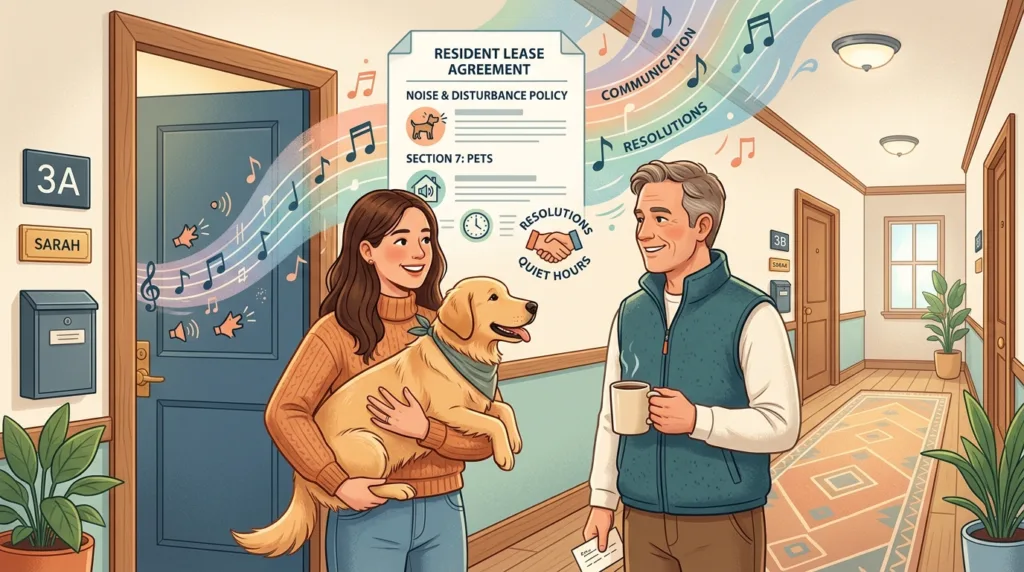
A noise complaint is often the first visible sign of a relationship strain between a pet owner and neighbors — but it doesn’t have to become a lease-ending crisis. With a calm, diagnostic approach you can identify whether the sounds are ordinary, fix preventable triggers, adapt to the building’s acoustics, and restore trust before management steps in. This article gives a step-by-step workflow, a seven-day response plan you can start today, and a practical cause/action table to resolve complaints efficiently.
Start by diagnosing, not defending
When you first learn a neighbor is upset about pet noise, instinct may push you to argue that “my pet is fine.” Instead, pause and diagnose. Noise complaints often arise from a handful of root issues that are easier to address than you might think: normal vocal behavior that becomes nuisance in close quarters, predictable triggers, and building features that amplify sound. Treat the complaint as data: what time, what sound, and what set of conditions produced it?
Separate ordinary animal sounds from problems
Animals vocalize for many valid reasons — dogs bark to alert or play, cats yowl during mating season, birds call for attention. But “ordinary” is context-dependent. A bark at 2 a.m. is a problem; a short bark at 7 a.m. may be neighbor-tolerable. Your first job is to establish patterns. Ask for specifics: what time, how long, and how frequently?
Diagnostic workflow: a step-by-step guide
Follow this workflow in sequence. Skipping steps often escalates conflict unnecessarily.
1. Observe and collect facts (hours 0–24)
- Ask the neighbor for specifics and be genuinely receptive.
- If safe and reasonable, record short audio clips of the sound when it occurs to identify patterns. Do not record private conversations and check local recording laws.
- Note times, duration, and whether particular activities (walks, deliveries, construction) coincide with the noise.
2. Identify preventable triggers (day 1–2)
Many incidents have simple triggers: an empty food bowl triggers vocalization, passerby dogs set off reactivity, or the doorbell provokes barking. Target these first. Practical fixes include changing feeding schedules, using puzzle feeders to reduce attention-seeking, and timing walks to coincide with quieter hours in the building.
3. Assess building acoustics and routines (day 2–4)
Hard floors, thin walls, and poor layout magnify sound. Running a controlled test (short, supervised vocalization simulating the complaint) can help determine the acoustic path. Sometimes a rug, soft furnishings, or moving the pet’s resting spot away from shared walls reduces transmission substantially.


4. Communicate with neighbors and management (day 2–5)
Clear, respectful communication is the most effective de-escalator. Offer a plan and a timeline for corrective steps. If management is already involved, share your documentation and proposed solutions rather than getting defensive. Referencing best practices for renters and pet-friendly housing can help frame the conversation; resources like the ASPCA’s guidance on pet-friendly housing and renter responsibilities are useful reference points: ASPCA — Pet-Friendly Housing.
5. Document everything (ongoing)
Keep a log of complaints, steps you’ve taken, and behavior changes. This documentation can be crucial if a landlord uses the complaint to justify lease penalties. You can also assemble a pet resume or application supplement to show proactive care — see PetzNews’ pet resume guide for renters: Pet Resume & Rental Application Guide.
6. Train or modify care routines (day 3–14)
Work with the actual source of the noise. For dogs, positive reinforcement for quiet behavior, counterconditioning, and structured exercise often reduce persistent barking. For cats, enrichment and environmental modification can lower attention-seeking yowls. Professional trainers or behaviorists can help, and many landlords accept certified behavior plans as evidence of remediation.
7. Escalate responsibly (after 7–14+ days)
If reasonable measures fail, escalate calmly: request mediation through the property manager or building association. If the property enforces rules unevenly, consult tenant resources — Humane World provides materials for tenants with pets: Humane World — Tenant Information. As you escalate, continue documenting. Avoid ignoring management notices; they may have timelines and procedures that can affect your lease.
Seven-day response plan: first-week checklist
Below is a compact timeline to organize immediate actions. Treat this as a flexible template you can adapt to your pet, building, and neighbor dynamics.
| Day | Focus | Actions | Goal |
|---|---|---|---|
| Day 0 (same day) | Fact gathering | Talk to neighbor, ask for specifics, apologize for disturbance; log details | Establish rapport and get concrete examples |
| Day 1 | Observation | Record pattern (time/duration); note triggers; brief supervised test if needed | Confirm whether noise is ongoing or sporadic |
| Day 2 | Preventive fixes | Adjust feeding, exercise, add enrichment, block visual triggers | Reduce immediate triggers |
| Day 3 | Acoustic tweaks | Move bed, add rugs, soft furnishings, seal gaps | Lower transmitted volume |
| Day 4 | Training | Begin short training sessions; consider consult with trainer | Teach quiet cues or alternative behaviors |
| Day 5 | Communication | Update neighbor and management with progress and next steps | Rebuild trust and show accountability |
| Day 6–7 | Assessment | Reassess patterns; escalate to mediation or professional help if needed | Decide on next level of action |
Cause → Action: a practical table
Use this cause/action table to translate findings into immediate remedies.
| Common Cause | Quick Action (within 48 hrs) | Next Step (3–14 days) |
|---|---|---|
| Attention-seeking barking or yowling | Increase enrichment & exercise; ignore attention-seeking behavior; add short interactive sessions | Train “quiet” cue with rewards; consider puzzle feeders; consult trainer |
| Reactivity to outside stimuli (dogs bark at passersby) | Block window views; use white noise; redirect attention during triggers | Desensitization/counterconditioning plan; leash training on walks |
| Noise amplified by walls/floors | Move bed away from shared wall; place area rug; add soft furnishings | Install bookcases, seal gaps; negotiate quiet hours with neighbors |
| Separation distress | Short departures with enrichment toy; practice brief absences; crate if appropriate | Behavioral program focused on desensitization; professional behaviorist |
| Medical causes (vocal strain, pain) | Schedule vet check | Treat underlying medical issues; reassess behavior after treatment |
Communication script examples
When you approach a neighbor or manager, language matters. Use calm, nondefensive phrases like:
- “Thank you for telling me — I want to fix this. Can you tell me what time you heard it and for how long?”
- “I’m taking these steps this week: X, Y, Z. Can we check back on Friday?”
- “If you notice it again, could you text me specifics so I can document and address it quickly?”
These small moves signal accountability and often defuse resentment faster than technical arguments.
When to involve management or mediation
If informal fixes do not work within a reasonable time, involve property management with your documentation and plan. Landlords are often motivated to maintain good tenant relations; presenting a remediation plan may prevent punitive lease action. Rental-sector practitioners note that landlords’ main concerns are nuisance risk and repeat complaints — demonstrations of proactive mitigation carry weight. See a practitioner perspective on landlord concerns here: Rental Housing Journal — Landlords & Pets.
If management takes action contrary to your rights as a tenant, or if you suspect discrimination (for service or assistance animals, for instance), consult a local housing authority such as HUD or a tenant-rights organization. Useful federal guidance on housing and discrimination is available from HUD: HUD.
Practical resources and preventive steps for renters
Prevention is better than remediation. When apartment hunting, ask targeted questions about pet policies and building features that affect noise. PetzNews’ apartment-hunting checklist for pet owners helps you screen for walls, elevator noise, pet policies, and amenities: Pet-Friendly Apartment Hunting Questions. Also review rules on deposits and fees ahead of time: Pet Deposit Rules for Renters.
Carry documentation that shows you are a responsible pet owner: vaccination records, a pet resume, and references. Landlords responding to complaints may be reassured by a proactive pet resume: Pet Resume & Rental Application Guide.
If your pet-free time requires travel
When you must travel, plan for reliable care. A stressed or under-stimulated animal at home can escalate noise problems — see PetzNews’ moving-day checklist for pets for practical tips when relocating: Moving Day Checklist — Pets & Renters.
What Improvement Should Look Like
The goal is not silence. A healthy rental arrangement allows ordinary pet life while preventing repeated, avoidable disruption. Judge the intervention by outcomes: fewer predictable noise episodes, faster recovery after a trigger, clearer communication with the neighbor, and a written record showing that you responded responsibly. If the pattern does not improve after a structured trial, the next step is not an argument about whether the complaint is fair; it is a more specific assessment of the dog, the apartment, and the lease process.
What Improvement Should Look Like
The goal is not silence. A healthy rental arrangement allows ordinary pet life while preventing repeated, avoidable disruption. Judge the intervention by outcomes: fewer predictable noise episodes, faster recovery after a trigger, clearer communication with the neighbor, and a written record showing that you responded responsibly. If the pattern does not improve after a structured trial, the next step is not an argument about whether the complaint is fair; it is a more specific assessment of the dog, the apartment, and the lease process.

Alex Tex writes about pets, rental housing, and everyday life with animals in the United States. After living in multiple rental homes and apartments and spending years caring for pets, he focuses on the practical challenges renters face — from lease rules and apartment routines to behavior, safety, and property care.