
Maya thought house‑training her new puppy would be only about treats and patience. The reality was logistics: elevator waits, a shared lobby, and a two‑minute walk to the street turned predictable cues into emergencies. This article reframes apartment house‑training as a troubleshooting workflow—an operational checklist you can run when things go wrong—so you can distinguish timing, supervision, substrate, accidents, medical causes and regression and fix the process rather than blame the dog.
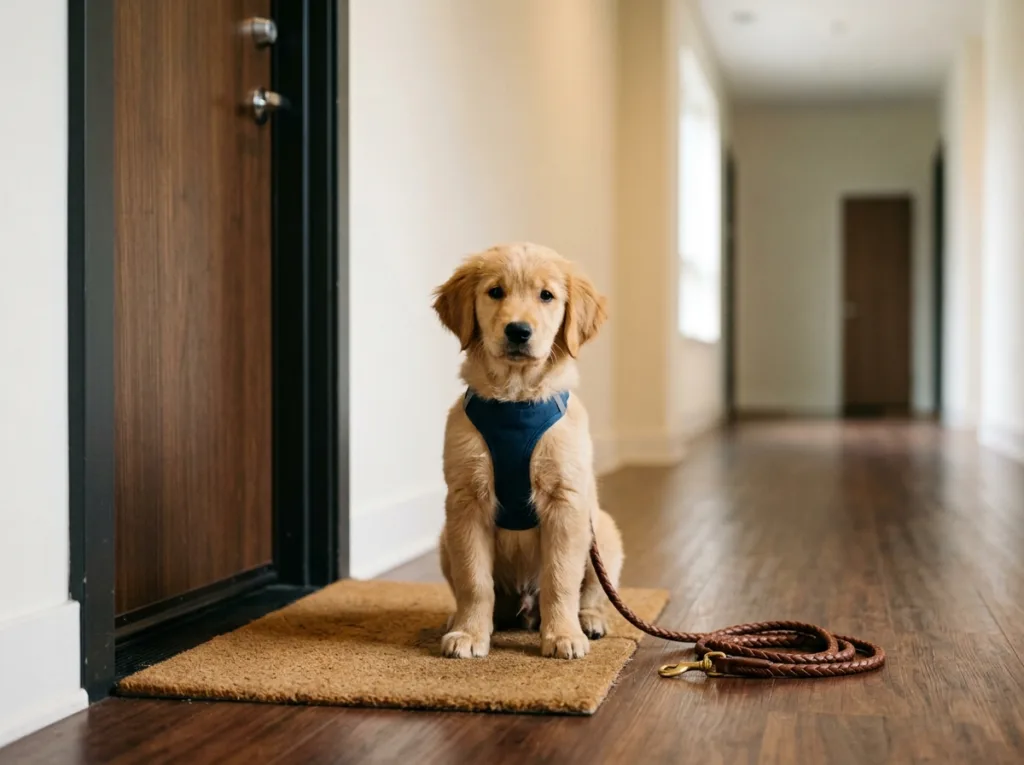
Thesis: Treat house‑training as a workflow, not magic
Most failures in apartment house‑training are solvable if you identify which part of your workflow is failing. Think in categories: timing (when trips happen), supervision (who watches and how), substrate (where elimination is allowed), immediate response to accidents, and medical/regression issues. If you can diagnose which of those five areas is breaking down, you can apply targeted fixes and stop repeating the same mistake.
Start with a baseline audit (the first troubleshooting step)
Before changing anything, run a two‑day audit. Track each elimination event (inside or outside), the exact time, context (after nap, after meal, when left alone), how long it took to reach the outdoor spot, and who was supervising. Record trips that end in success and trips that lead to accidents in the building. This small dataset turns anecdotes into evidence and shows whether your problem is a timing mismatch, supervision lapse, substrate confusion, or something else.
- Keep a notepad or phone timer near the door and log every trip for 48 hours.
- If you share responsibilities, ask each caregiver to record their trips on the same sheet.
- Measure door‑to‑spot travel time honestly—include elevator waits and putting shoes on.
Timing: the most common failure mode
In an apartment the time between “dog signals” and “dog is outside” is longer and more variable than in a house. Puppies and some adult dogs simply can’t wait through elevator delays or long lobby walks. If your audit shows accidents clustered at the moment you leave the unit or in the lobby, timing is the culprit.
Remedies:
- Leave earlier than you think—build the worst‑case travel time into your schedule. If the trip normally takes 90 seconds, plan for 3 minutes.
- Stage gear (leash, treats, shoes, bags) at the door so departure is immediate.
- Use stairs during peak elevator times when feasible.
- For very young puppies or pets with limited bladder control, set a temporary indoor substrate near the door as a safety net (see “Substrate” below).
Supervision: keep the chain unbroken
Supervision failures occur when there is an unsupervised gap long enough for the dog to eliminate. In apartments supervision includes physical proximity and the ability to respond immediately when your dog signals. If your audit shows accidents while you were distracted, working in another room, or when multiple caregivers are inconsistent, this is your area to fix.
- Crate or pen for unsupervised periods—properly sized and introduced positively.
- Visible schedule posted for everyone in the household; alarms for the first two weeks.
- If you must be gone longer than the dog’s bladder capacity, arrange a mid‑day visit from a walker, neighbor, or sitter.
- During training, keep the living area small so you can spot early signals (circling, sniffing) and respond.
Substrate: where elimination occurs and how it confuses dogs
Substrate means the surface on which a dog has been allowed to eliminate: grass, concrete, pee pad, indoor turf. Dogs form strong associations between substrate and elimination. If you use a pee pad, a turf box, and outdoor grass inconsistently, the dog gets mixed messages. Decide early whether you’re training exclusively for outside, or establishing a temporary indoor option while bladder control develops.
Best practices for substrate:
- Choose one outdoor elimination spot and use it consistently during early training—smell cues matter.
- If you provide an indoor backup, place it as close to the exit as possible and plan a gradual phase‑out (move it a few inches toward the door every few days).
- Reward elimination on the intended substrate within three seconds—timing of the reward is more important than the treat value.
Accidents: treat them as data, not discipline
An accident should trigger a diagnostic routine, not punishment. Punishing a dog for eliminating indoors can create anxiety around elimination signals and make the dog hide instead of telling you they need to go. Instead follow a five-step incident review:
- Clean the spot with an enzymatic cleaner to remove odor cues.
- Check your audit: Who was supervising? What was the last scheduled outdoor trip? How long since the last meal?
- Note the location pattern—same spot repeatedly? Common area? Near a sleeping place?
- Apply an immediate process fix: move a pad, adjust schedule, restrict access, or make a crate session shorter.
- If accidents persist, consult your veterinarian to rule out medical causes (see Medical section).
Enzymatic cleaners are recommended because they break down proteins in urine and feces that standard cleaners may not fully remove. Repeat offenses at the same spot are usually an environmental cue problem rather than stubbornness.
Medical causes and regression: know the red flags
When timing, supervision, and substrate are consistent and the dog still regresses, medical issues can be responsible. Common medical causes include urinary tract infection, gastrointestinal upset, age‑related incontinence in seniors, or pain that makes going outside difficult. Stress or anxiety—common after moves or building changes—can also produce temporary regressions.
Red flags that warrant veterinary attention:
- Sudden onset of frequent urination or accidents after reliability
- Blood in urine, straining, or apparent pain during elimination
- Appetite or energy changes accompanying accidents
- Age‑related loss of control in a previously house‑trained adult
Use cautious language: a vet visit is recommended when you see the above signs. Diagnostic tests may be needed and a vet will advise on treatment or further evaluation.
Failure‑Diagnosis Table: a quick troubleshooting matrix
| Symptom | Likely Cause(s) | Quick Test | Immediate Fix | When to Vet |
|---|---|---|---|---|
| Accidents clustered at door or lobby | Timing; elevator/stairs delay | Time door→spot during peak hours | Stage gear, leave earlier, use stairs | No unless change in frequency after fixes |
| Accidents while owner in another room | Supervision lapse | Shorten unsupervised intervals for 48 hrs | Crate/pen, smaller space, alarms | No unless behavior persists despite supervision |
| Dog uses pee pad and outdoor inconsistently | Substrate confusion | Observe preference over several trips | Choose one substrate; move pad toward door then remove | No, unless sudden change in pattern |
| Previously reliable dog starts having accidents | Medical, stress, schedule change | Check for other signs (pain, appetite); compare schedule | Stabilize routine; consult vet | Yes—seek veterinary exam promptly |
| Frequent small urinations indoors | UTI, incontinence, behavioral marking | Note volume and frequency; male intact vs neutered | Isolate behavior; clean with enzymatic cleaner; vet check | Yes—possible UTI or medical cause |
Common fixes as a stepwise workflow
When you encounter a problem, run this concise workflow:
- Consult your audit: what changed? (time, caregiver, route)
- Apply the simplest environmental fix: stage gear, shorten gaps, block problem areas
- Increase supervision and logging for 72 hours
- If accidents persist, implement an indoor backup near the door while you retrain timing
- If unreliability continues despite process fixes, book a veterinary consultation
Practical checklist for apartment owners
- Choose one outdoor spot and use it consistently for two weeks.
- Time door→spot during peak and off‑peak hours; add two minutes buffer.
- Stage leash, treats, shoes and bags at the door.
- Create a visible schedule and set alarms for the first two weeks.
- Use crate or exercise pen for unsupervised time, respecting age‑appropriate limits.
- Carry enzymatic cleaner and remove odor traces immediately.
- Keep treats on every outdoor trip; reward within three seconds of elimination.
- If moving or introducing a new dog, review settling steps from our moving day checklist for renters with pets.
Managing building realities and neighborhood friction
Shared hallways raise stakes: an accident can lead to complaints. Reduce neighbor friction by being proactive—carry waste bags, clean up immediately, and, when possible, avoid peak hallway congestion. If your building has rules or breed/size restrictions, consider preparing documentation (vaccination records, pet resume) to ease interactions or disputes; our pet resume and rental application guide explains how to present a responsible owner profile.
Training also interacts with stress. Changes to routine, loud building work, or new neighbors can increase accidents. If your dog shows signs of stress—pacing, excessive panting, trembling—review our resource on dog stress signs and how to help and consider slowing the house‑training timeline until the dog is calmer.
When an indoor option is the right long‑term choice
Some households opt to maintain an indoor elimination area long term: high‑rise dwellers, owners with senior dogs, or people with mobility limits. That choice is valid when it is intentional and managed to prevent confusion. If you plan for permanence, select a durable surface, keep it very near the exit, and maintain a predictable cleaning and replacement routine so your dog does not develop a habit of using multiple indoor spots.
Authoritative resources and further reading
For veterinary context and safe practices, consult resources such as the American Society for the Prevention of Cruelty to Animals (ASPCA) on puppy care and house training and the American Veterinary Medical Association (AVMA) for advice on medical causes of incontinence. These organizations provide guidance that can help you decide when a veterinary consultation is warranted: AVMA pet care resources.
When to get professional help beyond your vet
If you have addressed timing, supervision, and substrate and your dog still has persistent problems without medical explanation, consult a certified professional dog trainer or a veterinary behaviorist. Trainers with force‑free methods can help reintroduce cues and rewards without escalating stress. If the issue includes marking, separation anxiety, or fear‑based elimination, a behaviorist may recommend a broader treatment plan.
FAQ
How long should apartment house‑training take?
Progress depends on age, health, prior training, and building logistics. Many owners see reliable daytime control in six to eight weeks with consistent routines, but puppies and dogs with medical or anxiety issues may take longer. Use the workflow above and consult a vet if progress stalls.
Are pee pads a bad idea in apartments?
Pee pads are a practical safety net for very young puppies or when outdoor access is reliably longer than a dog’s bladder capacity. They become problematic when used inconsistently or indefinitely without a deliberate plan to phase them out. If you choose pads, place them by the door and move them gradually toward the exit as outdoor reliability improves.
What if my building enforces breed or size restrictions?
Know your lease and building rules and gather appropriate documentation. Our pet resume guide and the article on breed and size restrictions can help you present a clear case to property managers. For legal questions about housing and assistance animals, consult reliable legal resources and review the guidance in assistance animal documentation rules.
Learn how building amenities affect pet care →

Alex is the content editor at PetzNews, covering pet care guidance and pet-friendly housing topics for renters and property owners across the United States