
Condominium and homeowners association (HOA) boards frequently treat no-pets covenants as absolute. That posture can produce real-world harm for residents who rely on assistance animals and lead associations into avoidable legal exposure. This article takes an investigative legal-framework approach: it separates the HOA declaration from the federal reasonable-accommodation duty, analyzes documentation and direct-threat standards, explains undue-burden considerations, and lays out the practical process disputes typically follow. Because laws and enforcement practices can vary by state and locality, the piece uses cautious jurisdictional language and points readers to primary federal sources and practical next steps for both residents and board members.

Investigative framework: how we evaluate conflicts between declarations and disability accommodations
When disputes arise between a resident seeking an assistance animal and an HOA enforcing a no-pets rule, three broad questions determine the legal analysis:
- What do the association’s governing documents (CC&Rs, bylaws, rules) actually say?
- Does federal fair housing law — and relevant state or local law — create an obligation to make an exception to those provisions?
- If an exception is required, what process and documentation are legally appropriate, and what limits exist (for example, direct-threat or undue-burden defenses)?
To answer those questions rigorously you need to consult primary authorities (federal regulations and agency guidance) and treat state case law or statutes as jurisdiction-specific modifiers. For federal guidance see the U.S. Department of Housing and Urban Development (HUD) overview of the Fair Housing Act (HUD Fair Housing Act overview) and the implementing regulation at 24 CFR § 5.303. The U.S. Department of Justice also has authoritative statements distinguishing public-accommodations service animal rules from the broader housing assistance-animal standard used under the Fair Housing Act (DOJ guidance).
HOA declaration: what the documents do and do not decide
HOA governing documents — recorded CC&Rs, bylaws, and rules — set baseline expectations for occupancy, pets, and common-area conduct. Those documents can and do impose pet restrictions, breed limits, and size caps. But recorded covenants operate within the larger legal environment; they do not immunize an association from federal civil-rights obligations.
Under federal fair housing law, an HOA’s no-pets clause is treated the same way as a no-pets lease clause would be treated for rental housing: it is a housing policy that may be subject to a reasonable-accommodation obligation when a resident with a disability requests an exception. That interplay is a common source of confusion: board members sometimes believe that ownership converts every restriction into an untouchable private contract. In many jurisdictions, that belief is legally inaccurate. The FHA’s coverage of housing-related policies has been interpreted to include community associations in numerous administrative pronouncements and case decisions; however, state law and local ordinances can influence remedies and enforcement pathways, so caution is warranted when applying a single rule across jurisdictions.
Fair-housing accommodation: the legal standard and the board’s duties
The operative federal test is whether a requested modification or accommodation is reasonable and necessary to afford a person with a disability an equal opportunity to use and enjoy housing. Reasonableness is an individualized inquiry. Boards must engage in an interactive, documented review rather than issue blanket approvals or blanket denials.


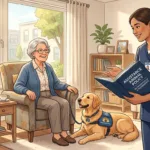
Key practical implications:
- Boards should not apply pet rules automatically to animals that are being requested as an assistance animal; the legal status of “assistance animal” is distinct from a pet under federal housing guidance.
- Associations may condition approval on appropriate documentation only where the disability or disability-related need is not apparent.
- Decisions must be supported by evidence if the association intends to deny a request on direct-threat or substantial-damage grounds; generalized concerns or fear of precedent are insufficient.
For boards seeking a template for what they can request and how to structure a decision process, PetzNews has a practical reference on documentation rules here: Assistance animal documentation rules. Residents can find a related resource for presenting a housing application with animal-related supports at Pet Resume: rental application guide.
Documentation: what an HOA can ask for and what it cannot
When a disability or the disability-related need for an animal is obvious (for example, a visibly trained guide dog assisting with mobility), an HOA generally may not demand proof. When the need or disability is not apparent, HUD permits housing providers to request reliable documentation that (1) the person has a disability and (2) the animal provides necessary support that alleviates one or more symptoms or effects of that disability. The provider may not insist on a specific diagnosis, full medical records, or proprietary certification cards sold online.
Practical considerations for boards and residents:
- Accept documentation from licensed health professionals familiar with the resident’s condition. The form and depth of documentation should be proportionate to the information reasonably necessary to evaluate the request.
- Do not build blanket lists requiring a specific title or single-provider attestation; instead, specify the types of reliable documentation you accept and why.
- Record requests and responses carefully; the absence of contemporaneous documentation is a common issue when disputes escalate to administrative complaints or litigation.
For residents preparing documentation, PetzNews maintains a set of practical tips and templates in its assistance-animal documentation guide and related pet-friendly housing articles. Also consider reviewing guidance about breed and size rules when relevant: Breed & size restrictions in rentals.
Direct threat and undue burden: defenses with strict evidentiary limits
Two principal defenses are commonly raised by associations when they deny assistance-animal requests:
- Direct threat: The specific animal poses a substantial risk to the health or safety of others that cannot be eliminated or reduced by reasonable accommodation.
- Undue administrative or financial burden (or substantial physical damage): Granting the accommodation would impose an undue hardship or would cause substantial damage to property.
Both defenses require an individualized, evidence-based analysis. A board cannot rely on stereotypes about a breed or a generalized fear about allowing any animals. Courts and administrative agencies emphasize individualized assessment: documentation about prior incidents involving that same animal, credible records of aggressive behavior, veterinary or professional reports about the animal’s history, and the availability of less restrictive accommodations are all relevant.
Be cautious: assertions about insurance risks, HOA liability, or maintenance costs should be supported by objective evidence tailored to the situation rather than speculative estimates. If an association is considering denial on these grounds, consulting the association’s liability carrier and a fair-housing attorney before issuing a final written denial is a prudent step.
The process: an evidence-based, document-driven checklist
Below is a practical, neutral checklist both residents and boards can use to structure the interactive process. This is a procedural decision aid — it does not replace legal advice.
| Step | Action for Resident | Action for HOA/Board |
|---|---|---|
| 1. Submit request | Provide written accommodation request describing disability-related need (no specific diagnosis required). | Acknowledge receipt in writing and log date. |
| 2. Seek clarification | If available, attach supporting documentation from a treating professional. | If need not obvious, request reliable documentation and specify acceptable sources. |
| 3. Evaluate | Respond to any follow-up promptly; offer additional information if relevant. | Conduct individualized assessment; consider site-specific risk and alternatives. |
| 4. Decision & documentation | Request the decision in writing if approval or denial is not communicated in writing. | Provide written decision stating specific, evidence-based reasons if denying in whole or part. |
| 5. Appeal & further steps | If denied, ask for reconsideration or mediation, preserve records, and consider filing with HUD or seeking counsel. | Offer an internal reconsideration pathway; provide procedural steps for appeal. |
Decision matrix: common board responses and likely legal assessment
| Board Action | Typical legal concern | Notes |
|---|---|---|
| Automatic denial of all animal requests | Failure to engage in individualized assessment | High risk of administrative complaint or lawsuit. |
| Require online certification/ID card | Request exceeds permissible documentation | Online ID cards have no federal legal weight. |
| Deny on breed-only basis | Stereotype-based decision; inadequate for direct-threat finding | Better to evaluate the specific animal’s history and behavior. |
| Approve with reasonable conditions (e.g., leash, cleanup) | Generally aligned with reasonable accommodation principles | Document conditions and enforcement procedures clearly. |
Practical next steps if an accommodation is denied
If a resident receives a denial, the best immediate step is to request that the association provide the denial in writing with the factual and legal basis for the decision. A written record clarifies whether the denial rests on direct-threat or damage evidence (which may be defensible in narrow situations) or on generalized fears (which are rarely defensible).
Options after a written denial can include informal mediation, filing a complaint with HUD’s Office of Fair Housing and Equal Opportunity, or seeking private counsel experienced in fair housing law. HUD’s complaint process is administrative and can lead to investigation; a private lawsuit under the Fair Housing Act is also an available remedy. For residents preparing for those paths, consider consolidating documentation, witness statements, and any prior communications with the HOA. PetzNews readers may also find our apartment-hunting and moving day resources helpful contextually: pet-friendly apartment hunting questions and moving day checklist for pet renters.
Conclusion and cautionary note
In many jurisdictions, a no-pets covenant does not relieve associations of the duty to consider reasonable-accommodation requests for assistance animals. Boards that adopt rigid, one-size-fits-all approaches risk fair-housing complaints; residents who rely on assistance animals risk unlawful denial if associations do not follow proper process. Both sides benefit from clear, written procedures, timely communication, and reliance on individualized, evidence-based assessments rather than assumptions. Because state and local law can affect remedies and procedures, both residents and boards should consider consulting local counsel or a fair-housing agency before finalizing a contested decision.
Frequently asked questions
Does a homeowners association’s no-pets clause automatically block assistance animals?
Not necessarily. Under federal fair housing guidance, an association’s pet prohibition may be subject to a reasonable-accommodation requirement when a resident with a disability requests an exception. The association must engage in an individualized evaluation rather than simply applying the clause automatically. Local law may affect enforcement and remedies.
What documentation can an HOA request about an assistance animal?
If the disability or disability-related need is not obvious, an HOA may request reliable documentation from an appropriate professional confirming the disability-related need. It generally cannot demand a specific diagnosis, full medical records, or certificates from private registries. See our guidance on documentation at Assistance animal documentation rules.
What should I do if my HOA denies my request?
Ask for a written explanation of the denial, including the factual basis. Consider asking for internal reconsideration or mediation, and if necessary, you can file a complaint with HUD’s Office of Fair Housing and Equal Opportunity or consult a fair-housing attorney. Preserve all communications and supporting documentation.
Note on individualized advice: This article summarizes federal guidance and typical administrative practice. It does not substitute for legal advice specific to any particular state, local government, or factual situation. Associations and residents should consult counsel or local fair-housing resources when disputes are contested.

Alex is the content editor at PetzNews, covering pet care guidance and pet-friendly housing topics for renters and property owners across the United States