
Litter box odor becomes especially noticeable in a small apartment because there is less physical separation between the box and the rest of everyday life. A box may be only a few steps from the living room, bedroom or hallway, which means that waste left too long, litter tracked onto the floor or residue on the box itself can affect the way the entire home smells.
The solution is usually less complicated than trying to “deodorize” the apartment. Odor control works best when waste is removed promptly, the box stays reasonably clean, the litter is acceptable to the cat and any material that escapes the box is dealt with before it accumulates. Fragrance can change what the renter smells temporarily, but it does not perform any of those jobs.
For renters, there is another consideration as well: cleaning has to be compatible with surfaces that may belong to the landlord. An aggressive product used around the litter area can create discoloration or residue while scented cleaners may make the box itself less appealing to the cat. Good odor control therefore depends on maintaining the litter area without creating a new behavioral or property problem.
Shorten the time that waste stays in the box
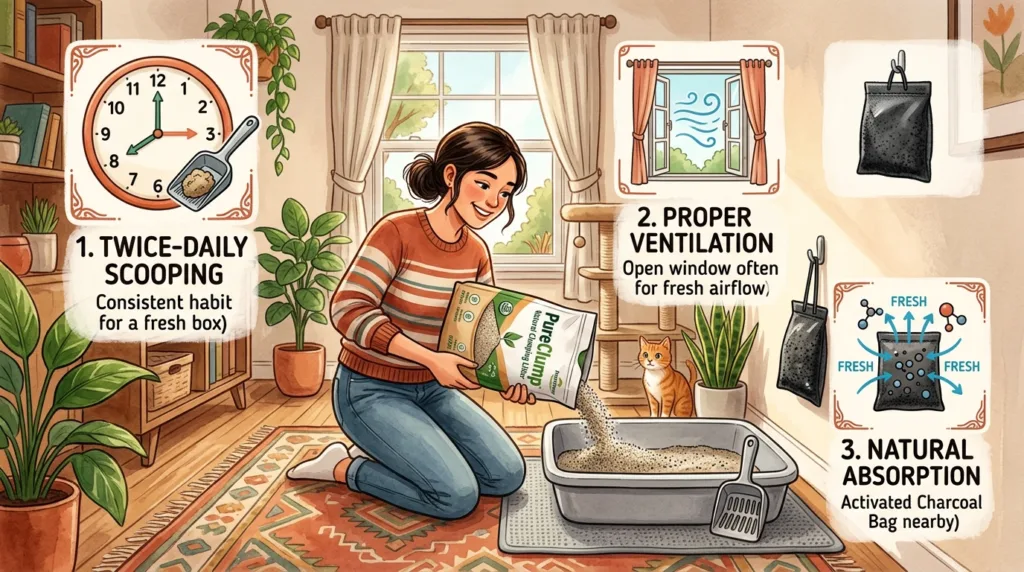
The most direct way to reduce litter box odor is also the least glamorous: remove waste regularly rather than waiting until the box smells unpleasant.
The CDC currently advises changing or cleaning cat litter boxes daily and washing hands after handling them. The ASPCA similarly recommends scooping waste at least once a day and keeping the box consistently clean.
Daily scooping matters for two related reasons. First, urine clumps and feces are obvious odor sources. Second, a dirty box can become less attractive to the cat. The ASPCA notes that cats generally prefer clean litter boxes and that poor box maintenance can contribute to litter-box avoidance.



This creates an important connection between odor management and feline behavior. Waiting until the renter notices a strong smell means the box has already been accumulating waste for some time. A routine based on regular removal is more predictable for both the person and the cat.
The rest of the cleaning schedule depends partly on the type of litter and box being used. The ASPCA recommends periodically emptying and washing litter boxes with warm water and an unscented soap or another mild cleaning method. Its general guidance also cautions against using ammonia, deodorants and strongly scented cleaners in the box.
That distinction is useful in a small apartment. A cleaning product that leaves a powerful fragrance may make the room smell “cleaner” to the renter while making the litter area less comfortable for a cat whose sense of smell is much more important to how it evaluates the environment.
FelineVMA guidance likewise notes that scented products, cleaners and detergents can be threatening or unpleasant to some cats and may contribute to undesirable elimination behaviors.
Consequently, the goal is not to make the litter box smell like perfume. A clean box should be relatively neutral.
The box and litter can influence how odor accumulates
Two litter boxes in the same apartment can behave differently even when they are cleaned on the same schedule.
One reason is the box itself.
A covered litter box may seem like an obvious odor-control solution because it partially contains what is inside. From the cat’s perspective, however, containing the odor can be a disadvantage. Cornell’s Feline Health Center explains that covered boxes can hold odors inside and that many cats prefer uncovered boxes.
That does not mean every covered box is unsuitable. Some cats use them without difficulty, and apartment layouts sometimes make an enclosure attractive to the renter. The important point is that a lid should not be treated as an automatic odor solution if it concentrates unpleasant smells where the cat has to enter.
The condition of the box also changes over time. Scratched or aging plastic can become harder to keep fresh, and Cornell recommends replacing old litter boxes that remain smelly or become cracked. If a box has been washed thoroughly yet develops a persistent smell again quickly, the container itself deserves consideration rather than simply adding more deodorizer.
Litter choice matters for another reason: the cat has to accept it. Both Cornell and the ASPCA report that many cats prefer unscented litter. A heavily perfumed litter may be more appealing to the person buying it without necessarily being more acceptable to the animal using the box several times a day.
Changing litter solely because another product promises better odor control can therefore create an unnecessary tradeoff. If the current litter works well for the cat and odor is becoming noticeable, examine scooping frequency, complete cleaning and the surrounding area before assuming that the litter itself needs to change.
Abrupt changes can also make troubleshooting harder. If the renter changes the litter, moves the box and introduces a new cleaner during the same weekend, it becomes difficult to know which change helped—or which one the cat disliked.
Treat the floor around the box as part of the litter area
Not all “litter box odor” is actually inside the box.
Granules travel on paws. Small amounts of urine can reach the edge or exterior of a box. A cat may occasionally miss the interior, particularly with a box that is too small or poorly suited to the animal. Once moisture or waste reaches surrounding material, cleaning the litter itself no longer addresses the entire source.
This matters in a rental because the nearby floor may be carpet, laminate, wood, vinyl or tile, each of which can respond differently to moisture and cleaning products. A removable litter mat can help contain tracking, but the area underneath still needs periodic inspection rather than being covered indefinitely and forgotten.
When something reaches the floor, respond according to the material. Avoid assuming that a homemade formula or a pet cleaner suitable for one surface can safely be used on another. If the flooring manufacturer or property manager provides care instructions, those instructions are more relevant than a generic cleaning trick found online.
For pet supplies themselves, the CDC distinguishes ordinary cleaning from disinfection and explains that items that come into contact with urine or feces may require cleaning and disinfection appropriate to the situation. Product labels and required contact or drying instructions should be followed rather than increasing concentrations in an attempt to remove odor faster.
The same restraint applies when an accident occurs outside the box. Cornell advises that cat-soiled household materials should be cleaned promptly and that odor needs to be neutralized rather than merely covered. Cornell also cautions against ammonia- or vinegar-based cleaners for cat-soiled areas because their odors may be irritating or resemble aspects of urine odor to the cat.
In a rental, prompt cleanup has an additional advantage: it reduces the chance that one small incident becomes a persistent carpet, flooring or baseboard problem. If urine has soaked deeply into landlord-owned material or visible damage develops, avoid concealing it with an improvised permanent repair. Significant changes to rental surfaces may need to be handled according to the lease or property instructions.
Placement can help with odor, but it should not undermine litter-box use
A renter dealing with odor may be tempted to move the box as far away from everyday living space as possible.
That can solve the human perception problem while creating an access problem for the cat.
As discussed in our guide to choosing a litter box location in a small apartment, the box still needs to be reasonably quiet, consistently accessible and separated from food-related areas. A distant closet is not an improvement if the door sometimes closes, nor is an isolated utility area necessarily useful if loud equipment makes the cat reluctant to enter.
Air circulation can make an acceptable location feel fresher, but ventilation should complement source control rather than replace it. An open window or exhaust fan, where appropriate and safe, cannot remove waste that remains in the box or urine residue that has reached another surface.
Similarly, sealing the box into a small cabinet merely to contain odor may make conditions less comfortable inside the enclosure. Before using litter-box furniture, confirm that the cat can enter and exit comfortably, the enclosure remains practical to clean and the box itself is large enough for normal use.
This is one of the places where aesthetics can work against maintenance. The more complicated the enclosure, the more effort it may take to scoop the box or notice material that has escaped behind it. In a small apartment, easy access for cleaning often contributes more to odor control than hiding the box perfectly.
Multiple cats amplify these practical constraints. Current CDC guidance recommends one litter box for each cat plus one additional box. More boxes require more floor space, but they also require consistent maintenance; hiding several boxes in difficult-to-clean locations simply distributes the odor problem rather than solving it.
When the normal smell changes, look beyond the air
Once a renter becomes accustomed to a routine, a sudden change is easier to notice. Perhaps the litter box begins smelling much stronger even though scooping frequency has not changed, or the cat starts urinating outside the box after months of consistent use.
At that point, repeatedly adding fragrance or experimenting with cleaners can distract from more relevant questions. Has the cat’s litter-box behavior changed? Is the animal urinating more frequently? Is there diarrhea? Has another cat begun interfering with access to the box? Did the household recently switch litter or relocate the box?
Litter-box avoidance in particular should not automatically be blamed on cleanliness or preference. The ASPCA advises that cats that begin eliminating outside the litter box should be evaluated for possible medical causes as well as environmental and behavioral factors. Cornell gives the same general boundary, explaining that medical conditions can interfere with normal urination and defecation and should be ruled out when litter-box problems develop.
That does not mean every unpleasant smell is a health problem. Most day-to-day odor control remains ordinary maintenance. The distinction becomes useful when something changes significantly despite a stable cleaning routine or when odor is accompanied by a change in elimination behavior.
For renters, noticing that difference early can also protect the property. Repeated urination outside the box can affect carpet, flooring and trim considerably more than ordinary litter tracking. If an incident begins affecting the rental itself, documenting pet-related property changes can help preserve what happened and when, while the underlying cat issue is addressed separately.
Keep the routine simple enough to continue
Litter-box odor control tends to become difficult when the solution depends on too many products or occasional deep-cleaning sessions.
A simpler system is usually easier to maintain: remove waste regularly, wash the box appropriately, keep the surrounding floor clean, use litter the cat accepts and pay attention when the normal pattern changes. Location and ventilation can improve the result, but they work best after those basic sources are under control.
This also provides a useful test for products marketed specifically around odor. If a product adds fragrance but does not improve waste removal, box cleanliness or the surrounding surface, it may change the smell without addressing what is creating it. In a rental apartment, that distinction matters because the objective is not merely to make odor less noticeable for a few hours; it is to keep the litter area from becoming a persistent problem for the cat, the renter or the property.
Once the maintenance routine is consistent, the apartment does not need to smell artificially scented to demonstrate that the litter box is under control. A neutral room, a clean box and a cat that continues to use it comfortably are more useful indicators that the setup is working.

Alex is the content editor at PetzNews, covering pet care guidance and pet-friendly housing topics for renters and property owners across the United States