
A lease renewal can look like a simple “sign here and stay.” For a renter with a dog, cat, fish tank, bird, rabbit, or another companion animal, it is often a new financial and safety decision. The renewal may change rent, pet rent, deposits, insurance, animal rules, maintenance responsibilities, notice deadlines, or the amount of money you need before the next lease term begins.
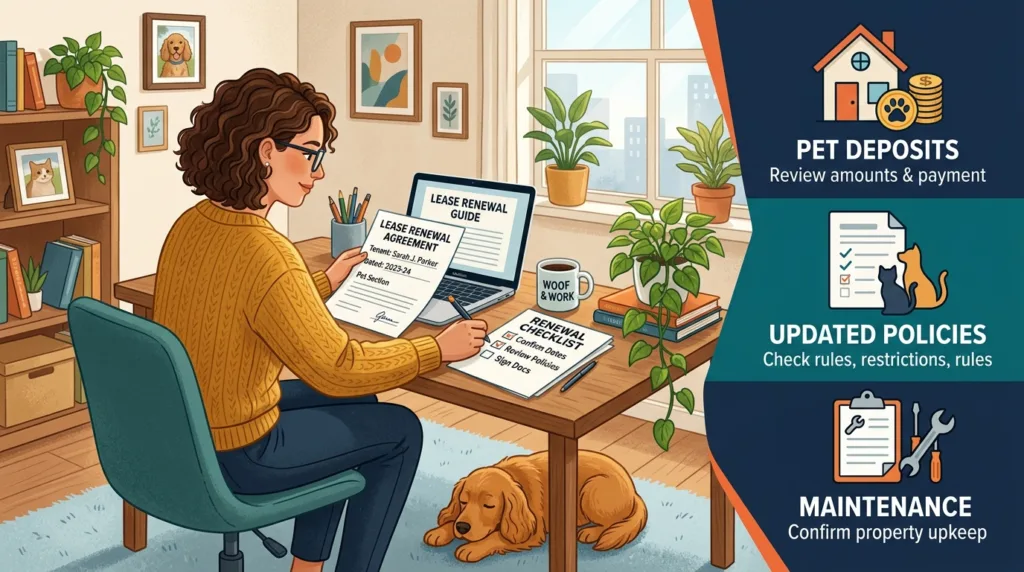
Do not compare only the new monthly rent with the old one. Compare the documents, the first-year cost, the animal’s daily routine, and the risk of being forced to move on short notice. This guide helps U.S. renters review a renewal before signing again. It is practical information, not legal advice; renewal notice periods, rent limits, deposits, pet charges, and nonrenewal rules depend on state and local law, the property type, and the lease.
First, treat the renewal offer as a new decision
Your current lease tells you what you agreed to before. The proposed renewal tells you what the landlord wants to govern the next term. Those documents may look nearly identical while changing one line that matters to your household: a new monthly pet charge, a different insurance limit, a breed or weight restriction, a shorter notice period, an automatic-renewal clause, or a new definition of pet damage.
Before you negotiate, save the current lease, pet addendum, fee schedule, inspection report, emails, and any written approval for your animal. Then save the proposed renewal as a separate file. Do not rely on a portal that replaces the old document when you click “renew.”
The goal is not to argue over every word. It is to identify changes that could cost you money, reduce your animal’s safety, or make the next move harder to plan.
The three-column review that catches expensive changes
Make a copy of the renewal and mark each change as keep, question, or negotiate. A useful review has three columns: what the current lease says, what the renewal says, and what you need the landlord to clarify in writing.



| Lease area | What to compare | Why a pet owner should care |
|---|---|---|
| Rent and term | New monthly rent, lease length, renewal date, concessions, and utility charges. | A lower-looking monthly increase may still be expensive if pet rent or utilities rise separately. |
| Pet charges | Deposit, nonrefundable fee, monthly pet rent, amenity fee, and per-animal pricing. | One changed line can add hundreds of dollars over a year. |
| Animal eligibility | Species, number, breed, weight, age, vaccination, guest, and temporary-care rules. | A policy that was quiet during the first term may become an enforcement issue at renewal. |
| Damage and maintenance | Carpet, flooring, odor, pest treatment, cleaning, repair reporting, and move-out language. | You need to distinguish ordinary wear from documented animal damage. |
| Insurance | Required coverage, exclusions, limits, providers, and deadlines. | A new requirement may make the renewal more expensive or impossible with your current policy. |
| Notice and exit | Nonrenewal notice, automatic renewal, month-to-month conversion, early termination, and transfer terms. | Missing one date can force a rushed move with an animal and increase housing costs. |
Calculate the renewal cost before you negotiate
Start with the amount the renewal requires on paper, then add the cost of living with the new terms. The first-year comparison should include the rent increase, pet rent, new deposit or fee, insurance, required services, transportation, routine pet care, and likely move-out costs.
Renewal cost difference = new housing costs − current housing costs + new pet-related and routine costs.
Use your own numbers rather than a national average. A $25 monthly pet-rent increase is $300 over a twelve-month term. A new $300 nonrefundable fee changes the move-in or renewal budget immediately. A required insurance policy may cost less than the fee it replaces—or it may add another recurring bill. Put every amount on one page so you can negotiate from a complete picture.
For a renter already under pressure, the choice is not always “renew or find something better.” Moving can involve an application fee, truck or movers, storage, utility deposits, pet deposits, missed work, and the risk that the next property has stricter animal rules. That does not mean you should accept an unsafe or unaffordable renewal. It means you should price both paths before the deadline.
For help separating deposits, fees, and recurring pet rent, see PetzNews’s guide to pet deposits and pet rent for renters. If the renewal adds liability coverage, compare it with the explanation of renters insurance and pet liability.
Do not let “pet-friendly” disappear at renewal
Check whether the proposed document still accepts the exact animal that lives with you. Look for changes to species, number of pets, breed or weight, aquarium size, caged animals, guest animals, foster animals, and temporary care by a family member or dog walker.
Ask whether the renewal carries forward the existing written approval. If the original lease or an attached approval identifies your animal, preserve that document. If the new lease uses a general policy that appears narrower, ask the landlord to state in writing whether the current animal remains approved and under which terms.
If the animal is connected to a disability-related accommodation, do not treat the renewal as an ordinary pet-policy question. The U.S. Department of Justice explains that service animals and assistance animals can be governed by different rules depending on the type of animal and location, while housing may involve the Fair Housing Act or Section 504 rather than only public-access rules under the ADA DOJ explanation of service and assistance animals. For the housing-specific context, read PetzNews’s guide to assistance animals in senior housing and obtain local advice for a disputed case.
Inspect the home before you sign again
A renewal is a useful moment to document the condition of the unit, especially when the proposed lease changes cleaning, carpet, flooring, pest control, or pet-damage language. Take date-stamped photos or video of carpets, doors, baseboards, flooring, windows, screens, balconies, walls, and any area where an animal spends time. Keep receipts for repairs or cleaning you paid for during the current term.
Look for practical safety problems as well. Is the gate still secure? Does the elevator close correctly? Is the outdoor relief route lit? Are there new construction barriers, pest-control notices, slippery surfaces, broken locks, or changes in access hours? A building can remain technically “pet-friendly” while becoming harder or less safe for your animal’s daily routine.
Ask who is responsible for repairing a damaged gate, treating pests, addressing leaks, replacing flooring, and notifying residents about work that affects animals. Put a maintenance request in writing before renewal if the problem could later be described as pet damage.
Build a deadline map instead of trusting a reminder email
Lease timing is local. A landlord’s email may be a courtesy, while the lease or state law controls a notice deadline. Do not copy a “30-day rule” from another state and assume it applies to you.
As soon as the renewal arrives, write down four dates: when the offer was received, when the landlord requires your answer, when the current lease ends, and when notice to leave is due. Then add the dates for an insurance update, animal records, negotiation follow-up, and a backup housing search.
New York provides a useful example of why local research matters. The New York Attorney General’s tenant guide explains that notice requirements can differ based on how long a renter has lived in a non-regulated apartment and that rent-stabilized renewals follow different rules and timelines New York Attorney General’s renewal guidance. That is not a national standard; it is a reminder to check the jurisdiction where the property is located.
The same caution applies to cities. A renter in New York City, Chicago, Phoenix, Houston, or Tampa should check the applicable state and local rules, the property’s regulation status, and the actual lease. The city name alone does not tell you whether a particular pet fee, notice clause, or renewal term is lawful.
Use the renewal conversation to negotiate a safer arrangement
Landlords are more likely to respond to a clear proposal than to a long list of objections. Choose one or two priorities and support them with documents. You might ask to keep the existing pet terms, replace a new nonrefundable fee with a refundable deposit where permitted, keep the current insurance policy if it meets the requirement, or add a written statement distinguishing ordinary wear from documented damage.
Keep the tone specific:
“I would like to renew. Before signing, please confirm that my current pet approval carries forward, identify every new pet-related charge, and attach the revised fee schedule to the renewal.”
“The proposed renewal adds an insurance requirement. Please confirm the coverage limits, exclusions, deadline, and whether my current policy satisfies the requirement.”
“Please identify the condition or evidence that would be treated as pet damage and exclude documented ordinary wear from that charge.”
Do not promise a maintenance service, cleaning outcome, or animal behavior result that you cannot control. Do not accept a verbal concession as final. The agreement should show the negotiated term before you sign.
What renters are learning from real housing evidence
A peer-reviewed 2024 study of 24 current, former, and aspiring pet owners in affordable housing in Houston documented confusion about pet policies, high charges, breed and size restrictions, and safety concerns. The study describes the lived experiences of that Houston group; it is not a national survey and does not predict what will happen in your building read the Houston tenant study.
Its relevance to renewal is practical: renters can lose housing stability not only because a landlord says “no pets,” but because the policy is unclear, the cost is too high, or the available alternative is unsafe or unaffordable. A renewal review gives you a chance to identify that risk before the current term expires.
Recent local policy activity shows why old assumptions can become outdated. The District of Columbia’s official legislative record lists the Pets in Housing Amendment Act of 2025 as legislation under review, including provisions related to insurance practices and breed-related information. A bill under review is not a national rule and does not automatically change your lease, but it is a useful reminder that pet-housing rules can move at the state and city level.
Choose one of three outcomes before the deadline
By the time you respond, your documents should support one of three decisions.
- Renew as written: The new cost is manageable, your animal’s approval and safety are clear, and the notice and exit terms are understood.
- Renew after written changes: The home works, but you need the pet terms, insurance, maintenance responsibility, or fee schedule corrected before signing.
- Decline and plan the move: The renewal is unaffordable, unsafe, materially changes animal access, or remains unclear after reasonable written questions.
If you may move, start before the final notice date. PetzNews’s apartment-hunting guide can help compare the next property before an application fee. The moving-day checklist for renters with pets can help you plan transport, records, supplies, and safety. If you are considering subletting or ending early, review the guide to subletting or breaking a lease with a pet and seek local advice before acting.
Before you sign: the one-page renewal file
Keep a final folder containing the current lease, proposed renewal, pet addendum, written approval, fee schedule, insurance confirmation, inspection photos, repair records, negotiation emails, and the signed version. Rename the final file with the effective date so you do not accidentally rely on an earlier draft.
If the landlord refuses to clarify a major change, gives conflicting answers, or pressures you to sign immediately, pause and obtain local tenant guidance. A renewal decision is not only about preserving the apartment. It is about preserving a workable budget, a safe environment, and a written set of expectations for the next term.

Alex Tex writes about pets, rental housing, and everyday life with animals in the United States. After living in multiple rental homes and apartments and spending years caring for pets, he focuses on the practical challenges renters face — from lease rules and apartment routines to behavior, safety, and property care.